Dog paw licking: a complete guide to causes (food, environment, and behaviour)
If your dog is licking the same paw on repeat, the cause is almost never just a habit.
· 9 min read
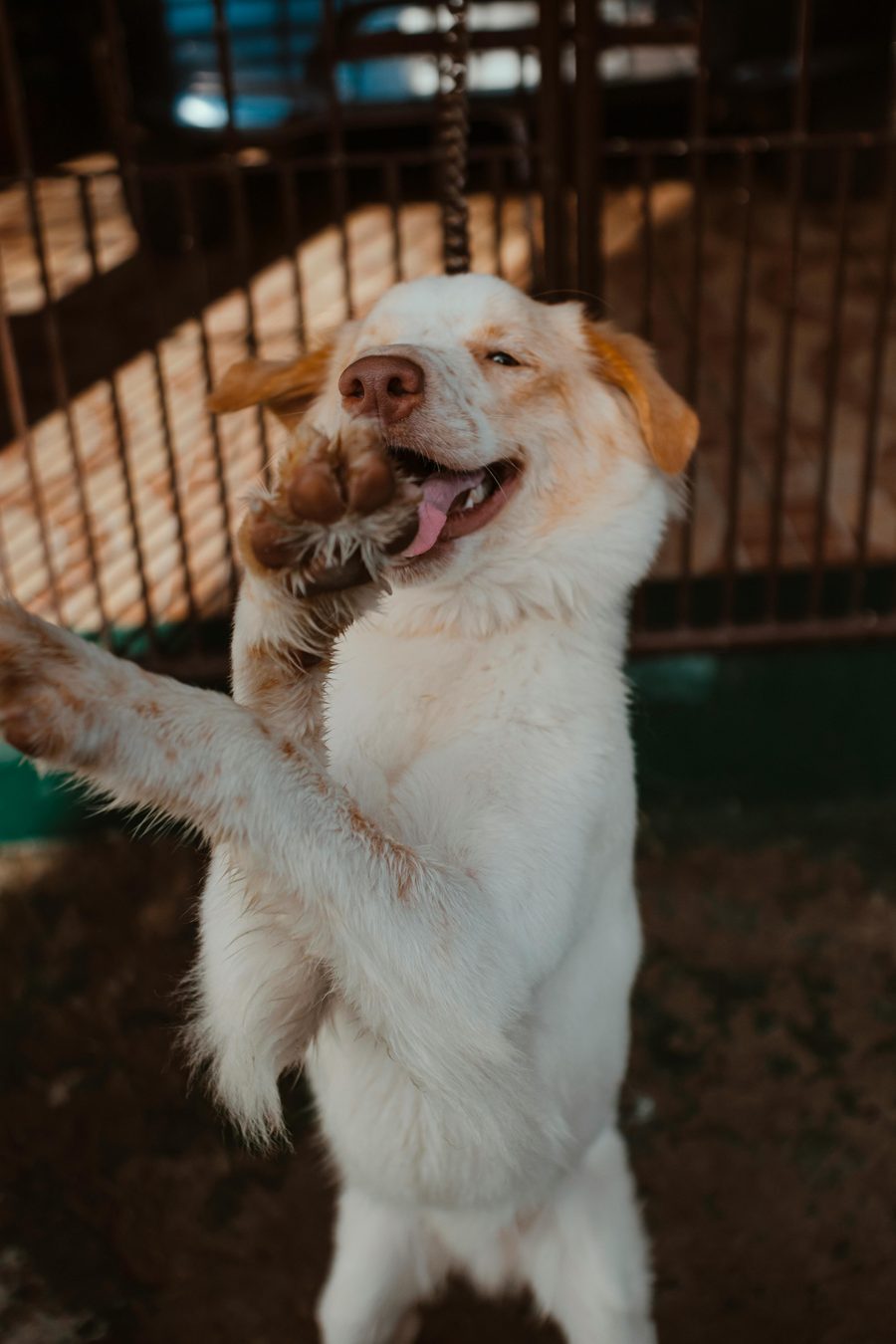
If your dog is licking the same paw, the same way, day after day, the most useful thing you can do is stop calling it a habit. Persistent paw licking is one of the loudest, most reliable allergy signals a dog has. It usually has a physical cause. Most of the time, that cause is in the bowl or on the floor.
This is a complete walkthrough of the four buckets paw licking falls into, how to tell which one applies to your dog, and a 30-day checklist for figuring it out. The goal is not to replace a vet, it’s to give you the questions a vet often doesn’t ask.
Why paws are the loudest symptom site
Of all the places a dog’s allergy can show up, face, ears, belly, armpits, groin, paws, paws are the site that tends to flare first and most visibly. There are three reasons.
The skin between the toes is thin. It picks up irritation faster than the back or the flanks. Paws are also in constant contact with the floor, with fabric, with grass, with anything you wipe the kitchen with. They get more chemical exposure per day than any other part of the dog. And dogs have very few ways to relieve discomfort there. They can shake their head if their ears are itchy. They can roll on a rug if their back is itchy. For paws, the only tool they have is licking.
So if your dog is licking, and the licking is focused on one or both front paws, the message is usually: “Something is bothering me, and this is the only way I can talk about it.”
The four buckets
Almost every case of persistent paw licking falls into one of four buckets. The buckets overlap, and most real cases are a combination, but it’s a useful frame.
The four causes, in order of likelihood
Food
The most common single cause. Food allergens show up at the extremities, paws, ears, face. Chicken is the top offender in dogs.
Environment
Anything your dog walks on, lies on, or breathes in. Phenyl, fabric softener, agarbatti, dust mites, mould. India's load is wide.
Yeast or bacteria
Saliva keeps paws damp; yeast thrives. The orange-brown stain and bread-like smell are the giveaways. A consequence, not a cause.
Behavioural
The rarest. A genuine compulsive licking pattern, usually after a physical cause has cleared up but the habit has cemented.
Before you call it a habit, rule out the three buckets in front of it.
Food triggers: the chicken question
The single most useful thing you can do for a dog with persistent paw licking is read the ingredient list of their food.
80%
of Indian pet food contains chicken, the #1 reported food allergen in dogs
If you’ve been feeding the same chicken-based food for a year and the licking has crept in over months, the food is the first place to look.
A dog can develop an allergy to a protein they’ve been eating for years, that’s how food allergies usually work. The immune system needs prolonged, repeated exposure to react. So “but he’s eaten this food forever” is not an argument against the food being the cause. It’s actually how the cause typically presents.
Read: Chicken allergy in dogs, signs, why it’s everywhere in India, and what to try
The standard way to test for a food allergy is an elimination diet, a single, never-eaten-before protein and a single carbohydrate for 8 weeks, with nothing else passing your dog’s lips. Treats included. Flavoured medications included. The strict version is the only version that gives you a clean signal.
Read: The elimination diet for dogs, an 8-week, India-friendly walkthrough
Environment triggers: what your dog walks on
If you’ve ruled out food (or are running an elimination in parallel), the next bucket is environment. The four places to look first:
The floor cleaner. Most Indian floor cleaners contain phenol, pine oil, or strong synthetic fragrances. Dogs walk on the wet floor, then lick their paws. The first thing that should change in any household with a paw-licking dog is the cleaner, or at least the routine around it.
Reading a floor cleaner label
Look for
- Plant-based or enzymatic formulas
- Labels that say "pet-safe" or "fragrance-free"
- Diluted white vinegar or castile soap for daily cleans
Avoid
- Phenyl, phenol, pine oil
- Strong floral or "lemon-fresh" synthetic fragrance
- Hospital-grade disinfectants on floors your dog walks on
Read: Is phenyl safe for pets? What’s in your floor cleaner, and what to use instead
The detergent and fabric softener on the dog bed. Fabric softener leaves a fragranced residue that lasts through multiple washes. Dogs sleep on this fabric for 12+ hours a day. If the bed has been freshly washed in detergent and softener, your dog has been bathing in it.
Read: Fabric softener and pet skin, the hidden trigger on every laundry day
The scent in the room. Agarbatti, dhoop, plug-in fresheners, scented candles, perfume, hair products. Dogs breathe these in continuously. A 7-day scent reset (everything fragranced removed, ventilation up) often clears up symptoms enough to confirm fragrance is part of the picture.
The season. If the licking flares between June and September every year, monsoon humidity is a factor. The yeast on the paws gets worse in damp weather and the floor stays wet longer. A monsoon-specific routine, drying paws after every walk, using a dehumidifier in the dog’s sleeping area, often makes the difference.
Yeast and bacteria: the orange-stain story
A paw that’s been licked enough to stay damp creates a perfect environment for yeast. The signs are recognisable:
- Orange-brown or pink staining of the fur around the paws.
- A faintly bread-like or yeasty smell to the paws.
- Skin between the toes that looks dark, leathery, or moist.
- The licking has become more frequent over time, not less.
Yeast overgrowth is treatable, but it’s the consequence of an underlying issue, not the issue itself. Treating only the yeast (with a medicated wash, say) will work for a few weeks and then come right back. The food and environment work has to happen alongside.
If the paws are clearly inflamed, broken open, or smelly enough that you notice it across the room, see a vet for the immediate infection. Then come back to the trigger work.
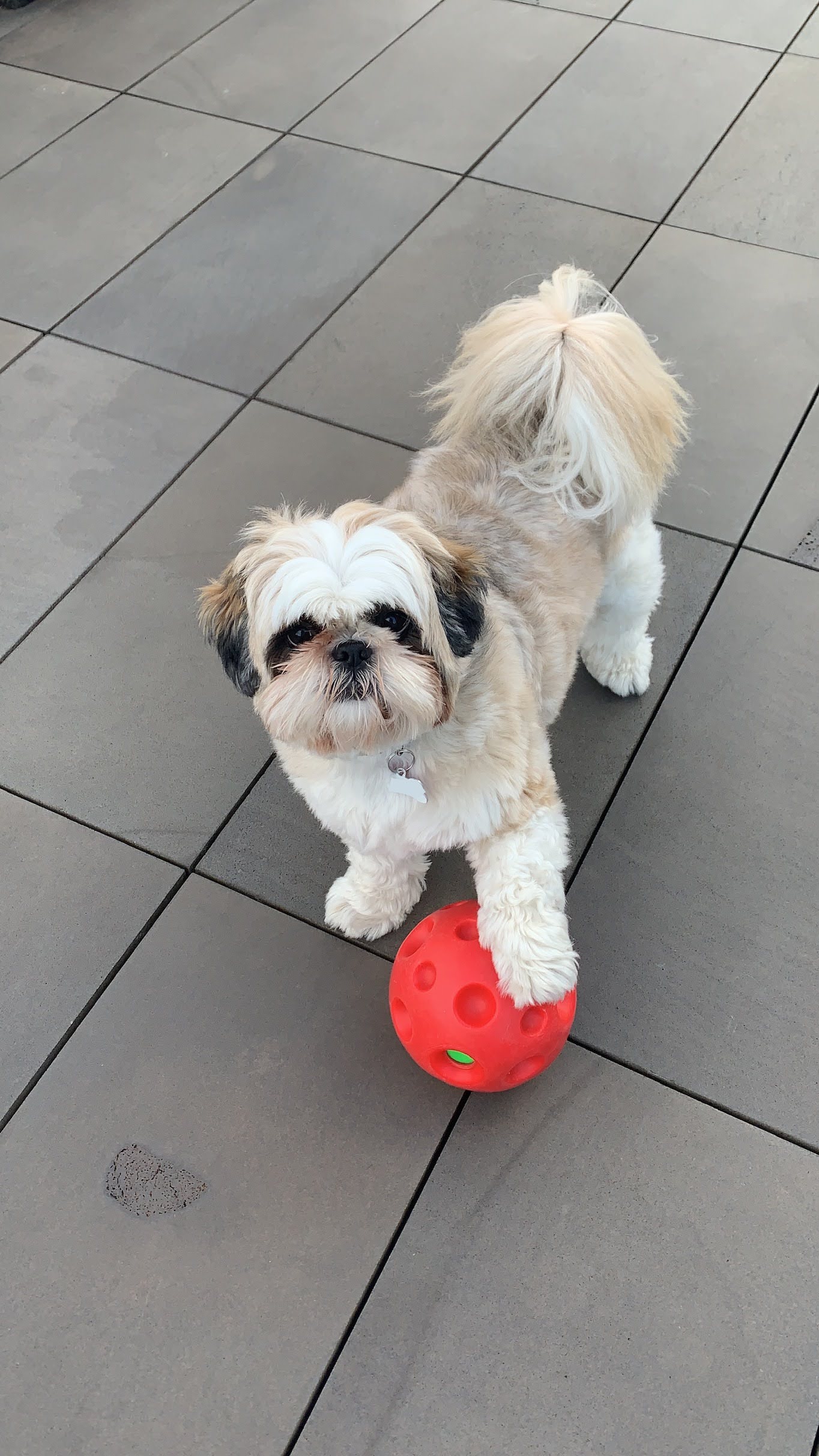
The behavioural angle: and why it’s usually misdiagnosed
Behavioural paw licking is real but uncommon. It tends to look like:
- Licking a single paw exclusively (rather than both front paws or all four).
- Licking that gets worse when the dog is bored or alone.
- Licking that fully stops when the dog is engaged in something else.
- A dog with a known anxiety profile (rescue history, separation issues, big environmental changes).
If your dog ticks none of those boxes and the licking is two-paw, frequent, and persistent regardless of activity, it’s much more likely to be physical. “Behavioural” is the bucket that gets reached for too quickly because it’s the easiest answer, but it’s the rarest one.
The 30-day checklist
This is the order to work through if your dog has been licking paws for more than two weeks and you’ve ruled out fleas and obvious injury.
A month, ordered
-
Days 1-3
Audit
- Read the food label. Note the first three ingredients.
- Note the floor cleaner you currently use.
- Note the detergent and softener used on the dog bed.
- List any candles, agarbatti, or plug-ins in your dog's main rooms.
-
Days 4-7
Swap the environment
- Switch to a pet-safe cleaner, or use plain water for the week.
- Wash the dog bed in fragrance-free detergent. No softener.
- Pause agarbatti and candles in pet rooms.
- Wipe paws after every walk and every wet mop.
-
Days 8-14
Watch and read the direction
- Count licks per day informally. Way fewer, about the same, slightly less is fine.
- Clear improvement points at environmental factors, keep going.
- No change at all means food is the next variable to test.
-
Days 15-30
Run the elimination diet
- Begin an 8-week elimination on a novel protein and a single carb.
- Strict, no treats, no flavoured chews, no pill pockets.
- Hold the environmental changes in place. One variable at a time.
- Note paw licking weekly.
-
Day 30
Decide
- Paws clearly better, continue to week 8, then reintroduce one ingredient at a time.
- Paws about the same, see a vet for a skin scrape, yeast culture, or dermatologist referral.
Take the 2-minute Allergy Check, it asks the same questions in a structured form and gives you a directional read.
When to see a vet, not a checklist
Most paw licking is a checklist problem. Some isn’t.
Your vet may prescribe a short course of antihistamines or topical treatment for the immediate inflammation. Use it. Then keep working on the underlying cause, the medication isn’t the answer, it’s just the breathing room.
Read: When to take your itchy pet to the vet, and what to actually ask
What to do this week
If you take only three things from this article, take these:
- Read your dog’s food label. If the first ingredient is chicken, that is your most likely starting point.
- Change your floor cleaner. Plain water for a week is enough to test.
- Wash the dog bed in fragrance-free detergent. Drop the softener.
If something improves in two weeks, you’ve found a piece of the puzzle. If nothing improves, food becomes the next test, and you have the elimination protocol to follow.
The fix is rarely fast. It’s almost always findable.
This article is education, not diagnosis. If symptoms persist or worsen, please see your vet.
Frequently asked
Why are my dog's paws red? +
Redness on the paws, especially the underside between the toes, usually means inflammation from licking, yeast overgrowth, contact irritation from a floor cleaner or fabric, or a food-driven reaction. Persistent redness across both front paws together is rarely behavioural and almost always points at allergy.
What does it mean when paws stain orange or pink? +
An orange-brown or pink stain in the fur around the paws (and often around the mouth) is porphyrin from saliva, your dog has been licking enough that the saliva is dyeing the fur. The stain itself is harmless. The licking is the signal.
Is paw licking ever just a habit? +
Genuine behavioural paw licking exists but is much rarer than people think, and is usually a habit that started because of a real physical itch and persisted after the underlying cause cleared up. Before treating this as 'just a habit,' work through the food and environment checklist.
Should I put a cone on my dog? +
A cone stops the licking but doesn't fix the cause, and once removed, the licking usually returns within hours. Cones are useful when paws are already broken open and need to heal, not as a long-term answer. Find the trigger.
How long should I wait before I'm sure it's allergies? +
If your dog has been licking paws for more than two weeks and you've ruled out fleas and an obvious cut, treat it as an allergy or sensitivity question. The longer you wait without changing inputs, the harder it is to know what helped.
Niko's story is what started ode. Read it →
Related reading
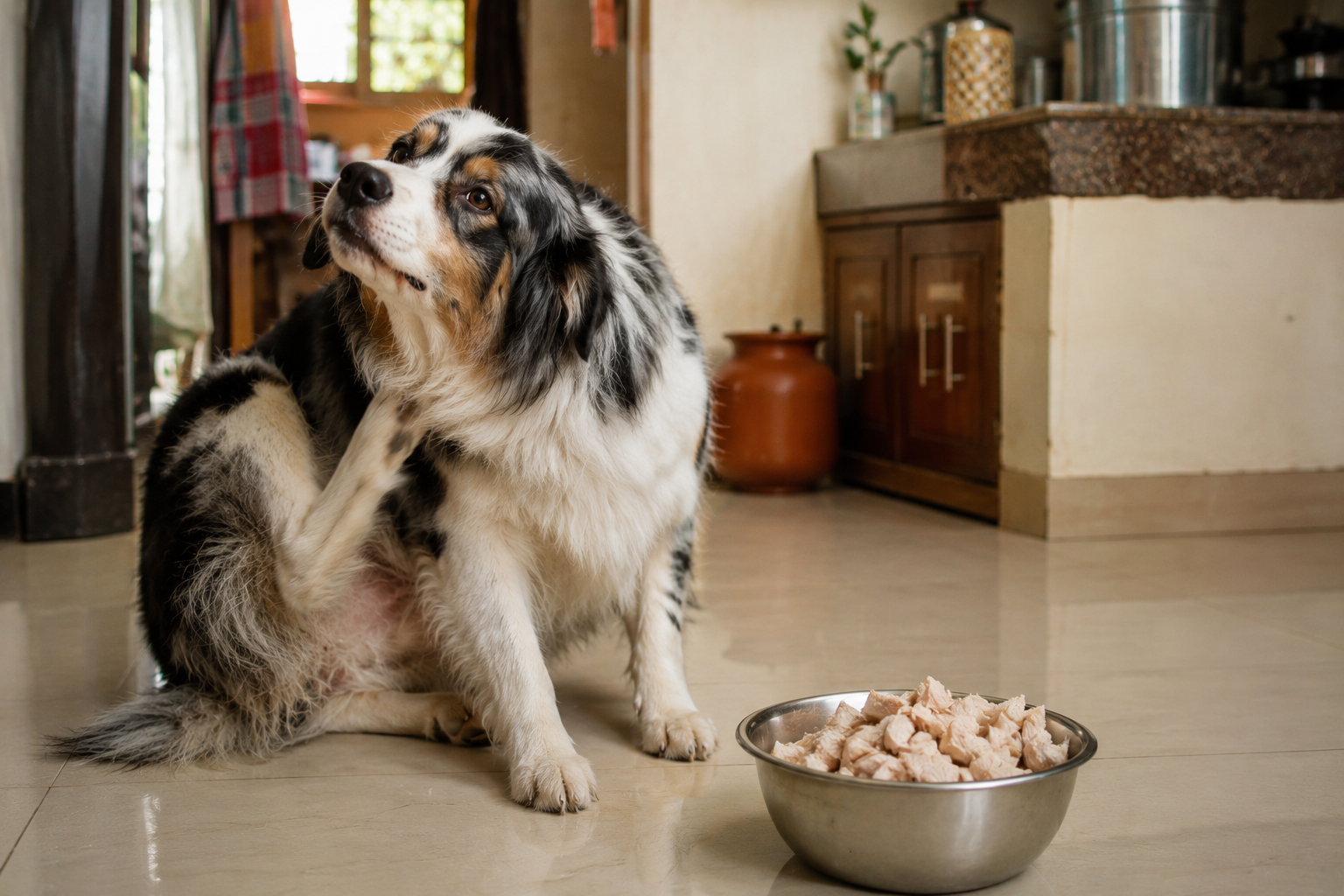
Chicken allergy in dogs: signs, why it's everywhere in India, and what to try
Symptoms of chicken allergy in dogs, why chicken dominates Indian pet food, what 'grain-free' really means, and the 6–8 week elimination check.
9 min read
When to take your itchy pet to the vet, and what to actually ask
When itching crosses into a vet visit, what notes to bring, and the five questions that make the difference between a steroid script and a real plan.
9 min read
Novel proteins in India: what to actually feed an allergic pet
Novel protein options for allergic dogs and cats in India: fish, mutton, rabbit, why duck isn't a real option here, sourcing, prep, and the 8-week trial rule.
9 min read