Fabric softener and pet skin: the hidden trigger on every laundry day
Fabric softener coats fabric in fragranced residue. Pets sleep on it for twelve hours a day.
· 7 min read
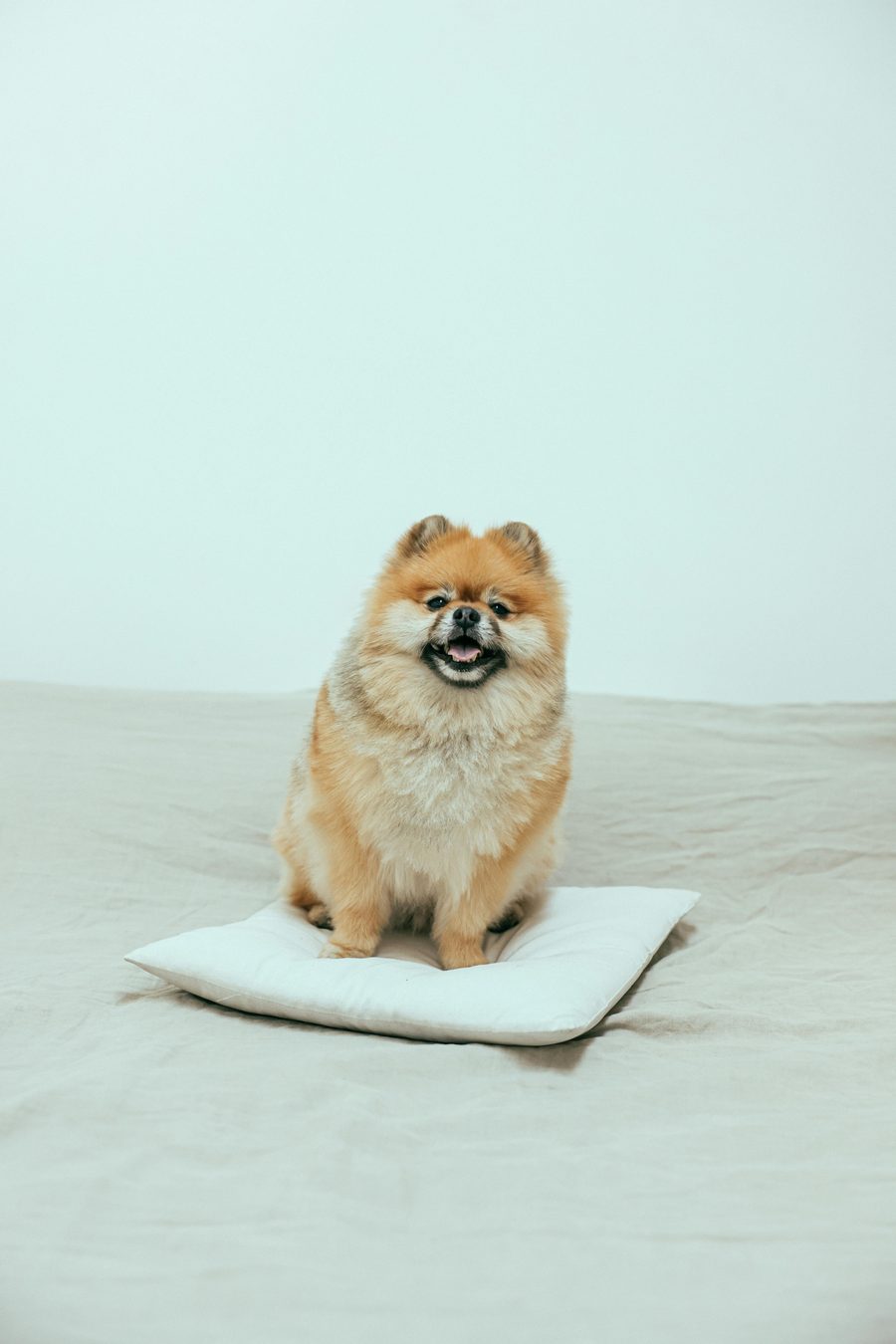
When a pet is on the floor for twelve hours a day, the floor matters. When a pet sleeps on fabric for twelve hours a day, the fabric matters too, and almost no one thinks to check the laundry routine.
This is what fabric softener actually does, why pet skin gets more exposure than human skin, the 2–3 week swap test, and the high-impact items to change first.
What fabric softener actually does to fabric
Fabric softener works by coating each fibre in a thin film of cationic surfactants, molecules that stick to fabric and reduce friction between fibres. The result is softer cloth, less static, and a held fragrance that lingers through multiple uses.
The properties that make softener effective on cotton are exactly the properties that make it persistent on cotton. The coating is designed not to wash out fully in a single use. That’s the point.
For human skin, occasional contact with treated cloth, a shirt, a towel, is brief and at low concentration. The exposure is not enough to bother most adults, and most fragranced softeners are formulated to be tolerable for human contact.
For pets, the exposure is structurally different.
Why pets get more exposure than humans
Three reasons.
Time. Most dogs and cats sleep 12–18 hours a day. They sleep on softener-treated bedding, sheets, sofa covers, and rugs. Their skin is in continuous contact with treated cloth across most of every 24-hour cycle.
Surface area. Pets sleep on their belly, side, or back, with the thinly-furred underside in direct contact with the fabric. Belly skin, armpits, and groin skin are thinner and absorb more readily than the back coat.
Grooming. Cats groom several times a day. Dogs lick their paws. Whatever was on the bed is now in the gut. Some softener compounds are not designed to be ingested at all.
Stack the three together, long contact, thin skin, then ingestion, and the cumulative exposure is meaningfully higher than any human in the same household experiences.
12-18 hrs
a day, most pets sleep on softener-treated fabric. The exposure pattern is structurally different from human contact.
The 2–3 week test
This is the simplest single environmental test. The protocol:
Week 1. Wash everything the pet sleeps on or sits on in fragrance-free detergent. No softener, no scented dryer sheets. Repeat the wash if you’ve been using softener heavily, you may need to run two washes to get the residue out.
Week 2. Maintain. No fragranced softener anywhere in the laundry of items the pet contacts. Continue with fragrance-free detergent only.
Week 3. Compare baseline.
The items that count: pet beds, blankets, sheets the pet sleeps on, sofa covers if the pet uses the sofa, and any rugs the pet lies on (these can sometimes be steam-cleaned without detergent, if washing isn’t practical).
What you’re watching for: less itching, less paw licking, less belly redness, fewer hot spots. If you see clear improvement, the softener was doing more than you thought. If nothing changes, you’ve ruled out a variable. Both are useful.
What to look for on a detergent label
The properties to seek out:
- “Fragrance-free” or “unscented.” Not “gentle,” “natural,” “sensitive skin”, those often still contain fragrance. The explicit word matters.
- No optical brighteners. These are fluorescent compounds added to make whites look whiter. They can sit on fabric and irritate. The label may say “without optical brighteners.”
- Plant-based surfactants are usually milder than the standard sulphate-heavy detergents. Look for coco-glucoside, decyl glucoside, or similar.
The properties to avoid:
- “Fragrance” or “parfum” in the ingredient list.
- “Cationic surfactants” without further specification: these are the fabric-softening compounds.
- Strong “freshness” or “long-lasting scent” claims on the front of the bottle. The longer-lasting the scent, the longer-lasting the residue.
If the label is in a font you can’t read, it’s a label that’s hiding things. Switch.
Reading a detergent label
Look for
- 'Fragrance-free' or 'unscented' explicitly
- Plant-based surfactants (coco-glucoside, decyl glucoside)
- 'Without optical brighteners'
- White vinegar in the rinse cycle as a softener replacement
Avoid
- 'Fragrance' or 'parfum' anywhere on the label
- 'Long-lasting scent' or 'freshness' claims
- 'Gentle' or 'sensitive' (often still contains fragrance)
- Cationic surfactants without further specification
Ironing, dry-cleaning, and other laundry shortcuts that can also be triggers
Two further sources to check if you’ve already swapped detergent and softener:
Starch sprays and ironing aids. These leave a fragranced film on cloth. Skip them on anything the pet contacts.
Dry cleaning. Conventional dry cleaning uses solvents, perchloroethylene is most common, that leave residues for days. Don’t dry-clean items the pet uses unless you can air them outside for a week first.
Stain remover sprays applied directly to fabric. Many leave a film that doesn’t fully wash out. Use them sparingly on pet items and wash the item afterwards.
Where to start: pet beds, sofa covers, bedsheets
If you can only change three items, change these. They are the items pets contact for the longest each day.
The pet bed. Wash the cover (and the inner if it’s washable) in fragrance-free detergent. Hot water if your machine allows it and the bed can take it, this also helps with dust mites. If the bed has been heavily softener-treated for years, do two consecutive washes. Some beds with foam inserts trap residue more than fabric, consider replacing the cover entirely.
Bed sheets the pet sleeps on. If the pet sleeps on your bed, your sheets are doing what your dog’s bed cover would do, coating their belly skin in softener residue all night.
Sofa covers. Anything washable goes through the same routine. Anything that isn’t washable, like a leather or upholstered sofa, gets a steam clean (no detergent) every couple of months and a dust-mite-proof cover during high-load seasons.
A practical laundry plan for an allergy-prone pet
Once a week, in the rain or otherwise:
- Pet bed cover, hot wash, fragrance-free detergent, no softener.
- Any blanket the pet sleeps on, same routine.
- Bedsheets the pet sleeps on, same routine.
- Air-dry where possible, sun and wind do more for fabric than the dryer in the long run.
Once a month:
- Sofa covers, same routine.
- Wash the dog’s harness and collar (if fabric-based).
Twice a year:
- Steam-clean any rugs the pet lies on. Replace if they’ve reached the end of their life.
This is unglamorous work. It is also a single ongoing intervention that prevents more flares than most pet parents would expect.
What to do this week
If your pet has any allergy-pattern skin issues:
- Read the back of your detergent and softener bottles. Note any “fragrance,” “parfum,” or strong scent claims.
- Buy a single bottle of fragrance-free detergent. Smallest pack you can find.
- Wash everything pet-contact-related in it for two weeks.
- Watch the pet.
Worth doing alongside this: switch the floor cleaner if you haven’t already, and drop fragranced room sprays from the pet’s main rooms. The interventions stack.
Read: Floor cleaners and pets · Read: Why is your dog itching? · Take the 2-minute Allergy Check
The bed your pet sleeps on is doing more to their skin than any shampoo will undo.
Most fabric-softener-driven flares are mild enough to go uninvestigated for years. They are also among the easiest changes to make. If you’ve ever wondered why the pet’s belly skin looks more inflamed after laundry day, this is probably part of the answer.
This article is education, not diagnosis. If symptoms persist or worsen, please see your vet.
Frequently asked
Can fabric softener cause itching in dogs? +
Yes. The fragrance and the cationic surfactants in softeners (quaternary ammonium compounds) coat fabric and stay on it through multiple uses. For sensitive dogs in long contact with treated fabric, bedding, sofa covers, this can produce real, persistent skin reactions.
Is Comfort safe for pets? +
Comfort and other major Indian fabric softener brands are designed to be safe for human use, including for sensitive skin. They are not designed with pets in mind. The active ingredients aren't acutely toxic, but the fragrance load and the coating residue are real triggers for some pets.
What is a 'free and clear' detergent? +
A 'free and clear' detergent is fragrance-free and dye-free. The phrase started as a category in the US but applies globally, what you're looking for is a label that explicitly says 'fragrance-free' or 'unscented' rather than 'gentle' or 'sensitive,' which often still contain fragrance.
Do I need to wash my dog's bed every week? +
Weekly is best, especially in humid weather, but every two weeks is fine for most dogs. The wash itself is more important than the frequency in any given fortnight. Hot water (60°C if your machine and the bed cover allow) helps with dust mites.
What about wool dryer balls or vinegar in the rinse? +
Both are reasonable replacements for fabric softener. White vinegar (half a cup in the rinse cycle) softens fabric without residue and rinses out cleanly. Wool dryer balls reduce static if you tumble-dry. Neither adds fragrance.
Niko's story is what started ode. Read it →
Related reading
Fragrance allergies in pets: candles, incense, plug-ins, perfumes
Why fragranced candles, agarbatti, plug-ins, and perfumes irritate pets, and why tea tree, citrus, eucalyptus, and peppermint oils are dangerous to cats.
8 min read
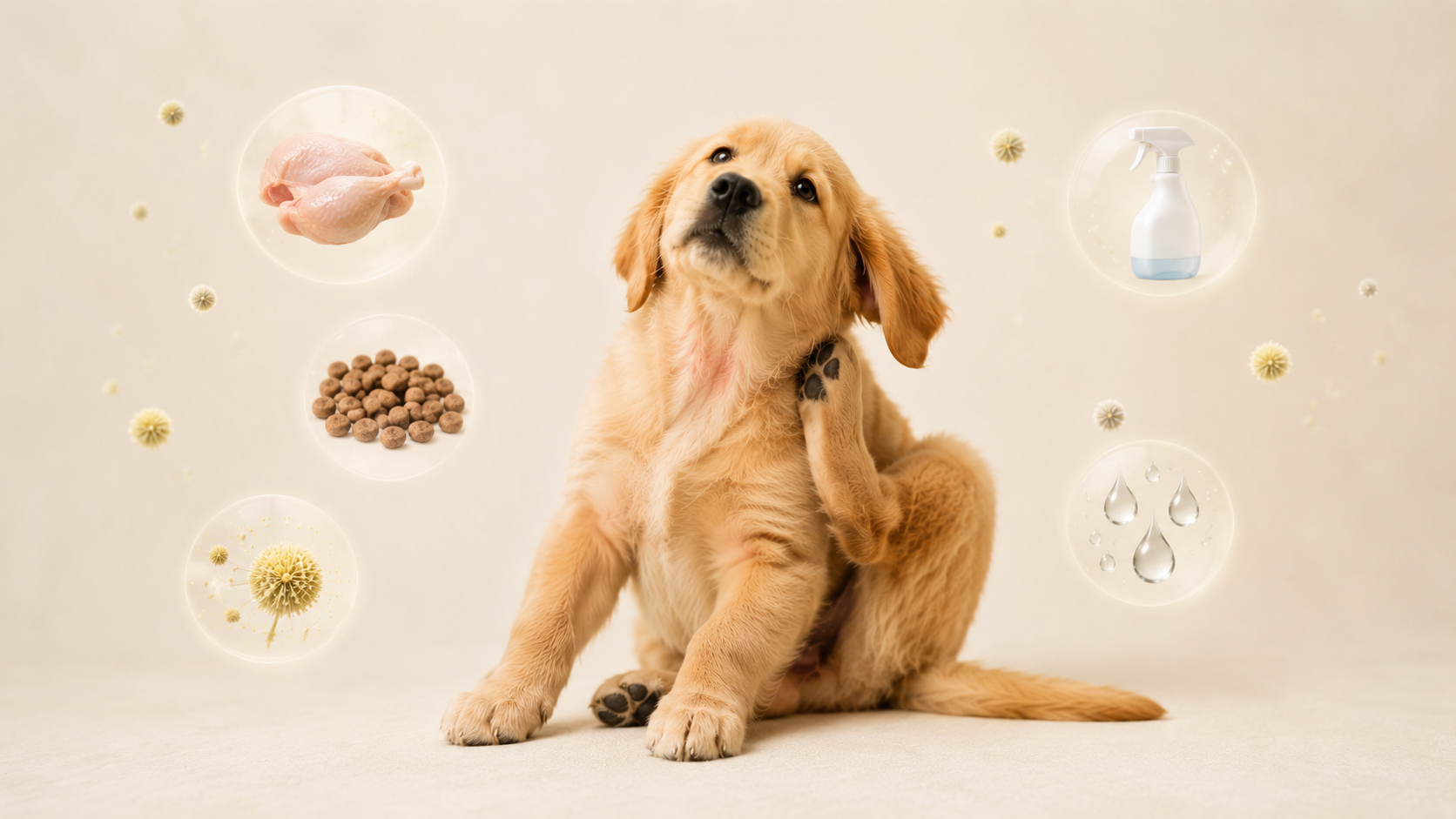
Why is your dog itching? The food question vets don't ask.
Why dogs itch, and why food is the most-missed cause in India. The two-week rule, the chicken question, and what to actually do this week.
10 min read
Dust mites and your pet: where they hide, what they do, what to change
Why dust mites matter for allergy-prone pets, where they live, why Indian humidity makes them worse, and the four interventions that actually help.
8 min read