Recurring ear infections in dogs: when it's the food, when it's the environment, when it's something else
If your dog keeps coming back from the vet with the same diagnosis, the infection is the symptom, not the problem.
· 9 min read
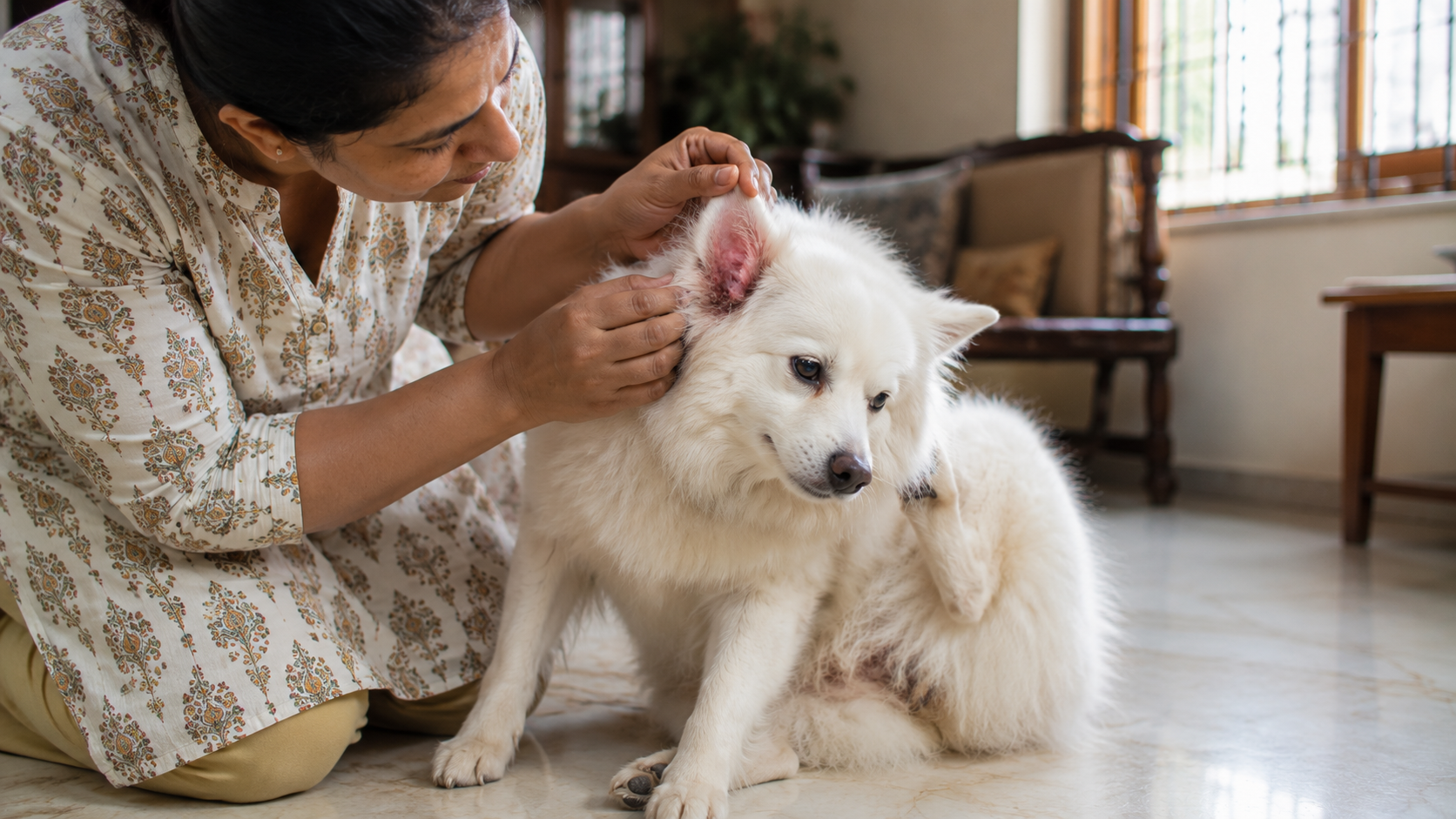
If your dog has had two ear infections in the last twelve months, the next one is already on its way unless something changes. The pattern of “vet visit → drops → cleared up → fine for a few months → back again” is one of the most reliable signs of an underlying allergy in dogs. The infection is the symptom. The allergy is the problem.
This is what’s actually happening, why food is so often the driver, where the environment fits in, and the recurrence playbook, what to change before the next round.
Why ears are an allergy bellwether
Ears are warm, dark, and moist. That’s true of every dog’s ears. What changes when an allergy is in play is that the skin lining the ear canal becomes inflamed. Inflamed skin produces more wax, more discharge, more moisture. Wax and moisture are food for the yeast and bacteria that already live in low numbers in every ear. Within days or weeks, the population overgrows. You smell it across the room. Your dog starts shaking their head and tilting it. The vet swabs, sees yeast or bacteria, prescribes drops.
The drops kill the yeast or bacteria. They don’t fix the inflammation. The skin in the ear is still being irritated by the underlying trigger, usually a food protein, sometimes an environmental allergen, often both. Within weeks the cycle restarts.
In practice, ears are one of the first sites a food allergy shows up in dogs. The food is digested, allergens enter the bloodstream, and the immune system reacts at the extremities, paws, ears, face, anal area. By the time you see a recurrent ear infection, you may already be a year or more into a reaction the rest of the body hasn’t loudly flagged yet.
2+ infections/year
almost always sit on top of an underlying allergy. The infection is the symptom. The allergy is the problem.
The food angle
Food is the single most common driver of recurrent ear infections in otherwise healthy dogs. Chicken is the leading culprit because it’s the leading allergen and is in roughly 80% of Indian pet food. Beef, dairy, and lamb come next.
A useful test: think back to when the ear infections started. Are you still feeding the same food today, or has it changed? If the food is unchanged and the infections began some months into eating it, the food is now your strongest hypothesis. Allergies need exposure to develop, this is why a dog can react to a protein they’ve eaten for years.
The food is the most common single driver of recurrent ear infections. The vet’s drops won’t outpace it.
The standard test is an 8-week elimination diet with a novel single protein and a single carbohydrate. Strict. No treats, no chews, no flavoured medications during the trial. Most dogs whose ear infections are food-driven show clear improvement by week 4 to 6, and the recurrence pattern stops.
Read: Chicken allergy in dogs · Read: The elimination diet for dogs
The environmental angle
Environment alone causes fewer cases than food but adds load on top of any underlying issue. The four environmental factors most worth checking:
Humidity
Most ear flares cluster in the monsoon (June–September). Dogs prone to ear infections need active monsoon care: dry ears after every walk, dehumidified sleeping space, more frequent checks.
Water
Swimming pools, beaches, baths, and rainwater in the ears all trigger flares. Dry the outside of the ear and canal entrance after every wet event. Ask your vet about a routine drying ear cleaner if your dog swims regularly.
Dust mites
The most common environmental allergen for urban Indian dogs. They live in bedding, sofas, and pet beds. Dust mite allergy often shows up at both the ears and the paws together.
Fragrances
Agarbatti, candles, plug-ins, and fragranced floor cleaners raise the dog's overall allergy load. Inflammation anywhere drives inflammation everywhere. If your dog is allergy-prone, the fragrance load in the home matters.
Read: Monsoon allergies in Indian pets · Read: Dust mites and your pet
The breed factor
Some breeds are mechanically predisposed to ear problems. Floppy ears (Cocker Spaniels, Basset Hounds, Beagles, Cavaliers) reduce airflow. Hairy ear canals (Shih Tzus, Poodles, Bichon Frises) trap debris and moisture. Breeds with both, Cockers, Cavaliers, Springers, are at the higher end.
This is not a fate. It’s a starting condition. A floppy-eared dog with allergy-driven ear inflammation will infect more easily and clear less easily. The work is the same, find the trigger, manage the environment, but the consequences of skipping it are bigger.
The infection itself
When an active infection is present, this is what your vet is looking at:
Bacterial infections tend to produce a foul or sour smell and yellow or green discharge. They respond to antibiotic ear drops. Severe bacterial infections (especially those involving Pseudomonas) can be hard to treat and may need a culture.
Yeast infections (usually Malassezia) often smell sweet, musty, or bread-like, with a brown or coffee-ground discharge. They respond to antifungal drops.
Mixed infections are common. Both can run at once.
What only a vet should do: examine the ear canal with an otoscope, check whether the eardrum is intact (this matters, some drops are not safe to use behind a damaged eardrum), take a swab for cytology, and prescribe the right drops at the right concentration. Do not use leftover drops from a previous infection without a check.
What you can do at home
Between vet visits and to prevent recurrence:
- Don’t use cotton buds inside the ear canal. They push debris and wax in, not out. Wipe only what you can see at the entrance with a soft cloth or cotton ball.
- Dry the outside of the ear after baths, swims, or rain.
- Watch the head shaking and tilting. A dog tilting their head consistently to one side, or rubbing one ear on the floor, is a flare warning. Catch it early.
- Don’t put oil, water, or vinegar mixes from the internet into your dog’s ear. Anything you put in needs to be safe behind a potentially damaged eardrum, and you don’t know whether it is. Use what your vet has prescribed.
- Track the infections. A simple note on your phone, date, ear, what it smelled like, what was prescribed, quickly reveals a pattern. Two infections in a year is enough data to investigate. Three is enough to act.
The recurrence playbook: 4 things to change before the next round
If your dog has had recurring infections and you want a different outcome the next time, these are the four things to change in parallel.
- 1
Switch the protein
Move to a single, novel protein your dog has never eaten before. For most Indian dogs this means fish (mackerel, sardines, rohu), mutton, or venison. Run it for 8 weeks, strict. If the recurrence stops, the food was a driver.
- 2
Audit the home for moisture
Where does your dog sleep? Is the bed dry? Is the room damp in the monsoon? A dehumidifier in the dog's main room during the rains, or moving the bed to a drier space, is often enough to take the load off.
- 3
Wash the bed and remove fragrance
Wash bedding weekly during a flare in fragrance-free detergent. No softener. Anything fragranced in the dog's main room — agarbatti, candles, plug-ins — comes out for the duration of the test.
- 4
Build a post-walk and post-bath routine
Dry ears properly after every wet event. If your vet has prescribed a routine ear cleaner for prevention, use it on schedule, not when the ear already smells.
Take the 2-minute Allergy Check
When to see a vet, soon
Inner ear and middle ear infections can affect balance and need imaging. Untreated chronic ear infections can damage hearing permanently. The point of doing the trigger work is exactly so you don’t end up there.
Read: When to take your itchy pet to the vet, and what to actually ask
What to do this week
If your dog has had a recent or ongoing ear infection:
- Finish the vet’s prescribed course in full, even if the ear seems fine after a few days.
- Read the ingredient list of the food. If chicken or chicken-based ingredients are in the first three, consider this your strongest single hypothesis.
- If you’ve already had two or more infections in twelve months, treat the next 8 weeks as a real test, switch protein, dry ears properly, drop fragrance.
Most dogs are not built to get ear infections every quarter for the rest of their life. The ones who do almost always have a fixable underlying issue. The work is in figuring out which one, and that’s a checklist problem.
This article is education, not diagnosis. If symptoms persist or worsen, please see your vet.
Frequently asked
Why does my dog keep getting ear infections? +
Recurring ear infections (more than two in a year, or a return within a few months of treatment finishing) almost always sit on top of an underlying allergy. Vets treat the active infection, antibiotic or antifungal drops, an ear flush, but the next flare is built into the underlying trigger if it isn't addressed.
Can food allergies cause ear infections? +
Yes. The ear is one of the first sites a food allergy shows up in dogs, often before any visible skin issue. A switch away from the trigger protein clears the recurrence in many cases, though it takes weeks to months, not days.
Should I clean my dog's ears at home? +
If your vet has prescribed an ear cleaner, follow their schedule. Routine at-home cleaning of healthy ears is generally not needed and can disrupt the natural flora. Don't use cotton buds inside the canal, they push debris in. Wipe only what you can see.
What's the difference between a yeast infection and a bacterial ear infection? +
Yeast infections often have a sweet, bread-like, or musty smell and a brown or coffee-ground discharge. Bacterial infections tend to smell foul or sour and produce yellow or green discharge. Many dogs have both at once. A vet's swab is the only way to know for sure.
Are floppy-eared dogs more prone to ear infections? +
Yes. Breeds with floppy ears (Cocker Spaniels, Basset Hounds, Beagles) and breeds with hairy ear canals (Shih Tzus, Poodles) have less airflow and trap more moisture. They are not destined to get infections, but they are more prone, and the underlying allergy work matters more for them, not less.
Niko's story is what started ode. Read it →
Related reading
Chicken allergy in dogs: signs, why it's everywhere in India, and what to try
Symptoms of chicken allergy in dogs, why chicken dominates Indian pet food, what 'grain-free' really means, and the 6–8 week elimination check.
9 min read
When to take your itchy pet to the vet, and what to actually ask
When itching crosses into a vet visit, what notes to bring, and the five questions that make the difference between a steroid script and a real plan.
9 min read
Monsoon allergies in Indian pets: humidity, mould, and what to change for 4 months a year
Why pets flare in the monsoon, yeast, bacteria, mould, and ear infections. The seasonal protocol: drying, ventilation, paw care, ear care, food adjustments.
9 min read