The lamb treat that's actually chicken: a label case study
An Indian pet treat named after lamb can legally contain zero actual lamb. Here's a well-known example, and how to read past the marketing on the front of the bag.
· 7 min read
This is the frustration that started ode. Standing in a pet store in Chennai, looking for a non-chicken treat for Niko after we’d just removed chicken from his diet, picking up a bag labelled “Roasted Lamb”, turning it over, and finding poultry on the ingredient list. Not once. Every flavoured treat on the shelf.
Here’s the case study, the mechanism, and the five-second test to read past it.
The product
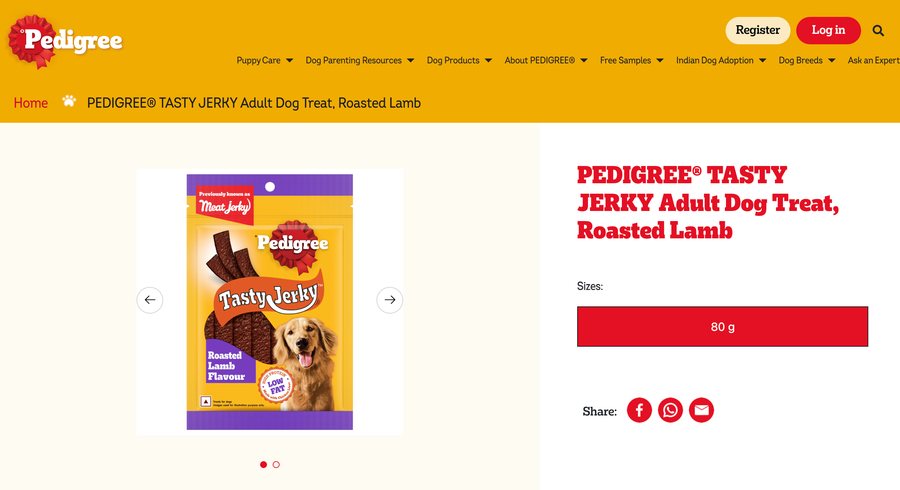
Pedigree Tasty Jerky Adult Dog Treat, Roasted Lamb. Sold across India, in supermarkets and online. The front of the pack says “Roasted Lamb”. The product images show what looks like strips of lamb meat. The marketing copy describes the rich taste of slow-roasted lamb.
The ingredient list, as published by Pedigree on their own product page, in order:
- Starch (Tapioca, Wheat)
- Gluten (Wheat, Maize)
- Glycerine
- Poultry Liver
- Sugar
- Minerals
- Roasted Lamb Flavour
- Vegetable Oil
- Preservatives
- Food Coloring
- Vitamin E
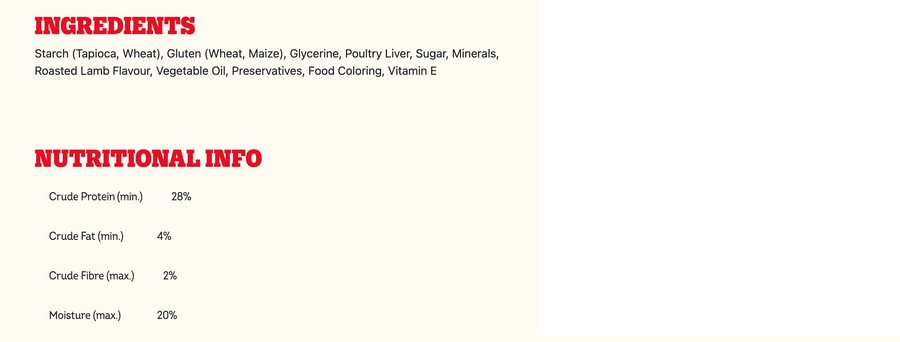
Read it once. The first three ingredients are starches and binders. The fourth is the only animal protein in the product, and it’s poultry. The fifth is sugar. “Roasted Lamb” appears in position seven, and not as meat: as a flavour.
There is no lamb in the lamb treat.
0%
actual lamb meat in Pedigree's Roasted Lamb Tasty Jerky, by their own ingredient list
How this is legal
FSSAI regulations require the ingredient list to be accurate. They do not require the product name to reflect the dominant ingredient. So a brand can:
- Name a product “Roasted Lamb” because it contains a small amount of “Roasted Lamb Flavour”.
- Use a chicken-derived protein source as the actual meat content.
- Make all of this clear on the back of the bag in a place most pet parents don’t read.
The product name is a marketing decision. The ingredient list is a regulatory disclosure. The two are not required to match.
In the EU and US, marketing claims are tighter. A treat labelled “Lamb” usually has to contain a minimum percentage of real lamb to use the name. India hasn’t adopted those rules yet. Until it does, the front of the bag is a hypothesis and the back is the evidence.
Why brands do this
Three reasons, in roughly the order of how much they matter:
1. Cost. Chicken and poultry by-products are the cheapest animal proteins in the Indian supply chain by a wide margin. Real lamb meat (or mutton) is multiple times the price per kilogram. A treat that’s mostly starch and a little poultry liver costs a fraction of a treat that’s actually lamb. The retail price stays the same; the margin doesn’t.
2. Palatability. Liver, especially poultry liver, is very strong-smelling and dogs find it deeply palatable. A bag full of dehydrated lamb chunks would be less interesting to a dog than a starch-and-liver chew that smells like fortified chicken broth. Brands optimise for what makes the dog eat the treat eagerly, which often isn’t what the front of the bag says.
3. Marketing. “Roasted Lamb” sells better than “Wheat Starch and Poultry Liver Chew”. The aesthetic of premium meat moves boxes off shelves.
Each reason is internally rational for the brand. Stacked together, they produce a category of treats where the most-sold “lamb” or “salmon” or “venison” option contains none of those proteins, and most of the chicken-allergy dogs they’re sold to react to them.
How to read past it: the five-second test
The shortcut is simple. Don’t read the front of the bag. Read only the first five ingredients on the back. Look for:
The five-second back-of-bag test
Look for
- First ingredient is a named meat (Lamb, Mutton, Mackerel, Sardines, Buffalo)
- Ingredient list is short (5-8 items)
- No 'flavour' as a separate ingredient
- No 'poultry' or 'meat' without species named
Avoid
- First three ingredients are starches, gluten, glycerine
- 'Poultry', 'meat', 'animal liver' (species unspecified)
- Named protein appears as 'flavour', not as meat
- Ingredient list longer than 12 items including additives
Apply this to the Pedigree product above: starches and gluten in positions 1-3, poultry liver in 4, lamb as a flavour in 7. Two of the four red flags hit on the first read. Skip the bag.
What this means during an elimination diet
If you’re running an eight-week elimination trial on a non-chicken protein, every flavoured treat in the house is a potential trigger. Not because of the flavour, but because of the hidden chicken or poultry that’s doing the actual protein work in the treat.
The fix isn’t to find a better-labelled treat. It’s to skip flavoured treats entirely for the eight weeks. Use:
- A piece of the same protein you’re feeding for meals, set aside as a treat (a bit of boiled fish from the same pot)
- Plain dehydrated fish strips (no flavours added, just dehydrated fish)
- Plain dehydrated mutton or buffalo if that’s your trial protein
- Single-ingredient pumpkin chews where available
These are not as exciting on a pet-store shelf. They’re also the only treats that don’t reset the clock on your elimination trial.
What to do this week
Pull every flavoured treat bag in your house. Read the first five ingredients on each. If any of them have starches in the top three, an unspecified “poultry” or “meat” in the protein slot, or the named protein appearing only as a “flavour”, set it aside. Either give it to a non-allergic friend’s dog or throw it out.
It will feel wasteful. It is wasteful. The brand made it wasteful. You’re just acknowledging the waste that was already there.
The front of the bag will keep lying. The five-second back-of-bag test is the answer that scales.
This article is education, not diagnosis. If symptoms persist or worsen, please see your vet.
Frequently asked
Is this legal in India? +
Yes. FSSAI regulations require the ingredient list to be accurate, but they don't require the product NAME to reflect the dominant ingredient. A 'Roasted Lamb Flavour' is a permitted ingredient, and a product can be named after a flavour rather than after a meat. The name is marketing; the ingredient list is the truth. Both can coexist legally on the same package.
What does 'Poultry Liver' actually mean? +
Liver from poultry, usually chicken, sometimes including other birds. The species often isn't specified. For an allergic dog or cat, treat it as suspect chicken exposure. Poultry by-products and liver are common sources of palatability (they taste strong, dogs love them) and are cheap, which is why they show up in flavoured treats more than the named meat does.
Are imported treats any better? +
Sometimes, but not always. EU and US labelling rules require named species and minimum percentages for marketing claims (e.g. 'Lamb' on the front means at least X% real lamb under EU regs). Indian rules are looser. So imported treats from EU brands often do contain the named meat. Check the ingredient list anyway. Lots of 'imported' brands sold in India are actually formulated for the Indian market with the looser rules.
If I'm running an elimination diet, do I have to throw out all treats? +
Yes, all flavoured treats. The single-protein elimination diet only works if the protein is single. Even one chicken-flavoured chew during week three of the trial resets the clock. Switch to a single-ingredient treat (plain dehydrated fish, a piece of the same protein you're using for meals) or skip treats entirely for the eight weeks. The diet's discipline lives or dies on this.
What's a clean treat option in India during an elimination trial? +
Dehydrated fish strips, plain. Dehydrated mutton or buffalo if your protein is mutton. A piece of the boiled fish or mutton from your pet's meal portion, set aside as 'treats'. Single-ingredient pumpkin chews if you can find them. Avoid anything with 'flavour', 'broth', 'natural ingredients', or unnamed animal sources.
Niko's story is what started ode. Read it →
Related reading

Hidden chicken: the ingredients that mean chicken without saying chicken
Natural flavour, animal fat, meat meal, poultry by-product: the label words that hide chicken in Indian pet food, treats, and prescription diets.
8 min read
What's actually in your dog's kibble: how to read an Indian pet food label
How to read an Indian pet food label, the order rule, what 'meat by-product' really means, hidden chicken, fillers, and why marketing language is meaningless.
11 min read
Why most Indian dog treats are off-limits during an elimination diet
Most mainstream dog treats sold in India contain chicken, including the ones that don't say so on the front. Here's what to give instead during an elimination, and why this matters more than most pet parents realise.
7 min read