Hidden chicken: the ingredients that mean chicken without saying chicken
Eight label phrases that quietly contain chicken, and how to read past them.
· 8 min read

The hardest part of getting a chicken-allergic pet off chicken is not finding a non-chicken food. It’s recognising that a lot of foods that look chicken-free are not.
Pet food labels are written to be technically accurate and practically vague. Once you know the phrases, you can read past them. Once you can read past them, an elimination trial actually works.
Why this matters
A single chicken-based treat midway through an 8-week elimination resets the trial. A daily pill pocket that contains chicken broth quietly invalidates the whole investigation. A vet prescription that says “for sensitive skin” but lists unnamed “animal fat” can be the reason your pet’s symptoms never quite cleared.
If you’re spending the time and money on a switch, the labels are where the work actually happens.
8 phrases
on Indian pet food labels that hide chicken without saying the word. Learn them and an elimination trial actually works.
The eight phrases to know
These are the most common ways chicken shows up on Indian pet food labels without the word chicken appearing in the first ingredient.
1. Natural flavour. The most common hidden form. In pet food, natural flavour is almost always hydrolysed chicken or chicken broth, used because it’s cheap and dogs love it. Unless the label specifies a source (natural mutton flavour, natural fish flavour), assume chicken.
2. Animal fat. Animal fat without a species name is usually chicken fat, again because it’s the cheapest rendering input. If the label says “chicken fat” you know. If it says only “animal fat” you have to assume chicken until proven otherwise.
3. Meat meal. “Meat meal” or “meat and bone meal” without a species name is a mystery box. It might be chicken, mutton, beef, or a blend. For an elimination trial it’s a non-starter. For routine feeding of a non-allergic pet, fine; for allergy work, no.
4. Poultry / poultry by-product / poultry meal. Poultry is usually chicken, occasionally turkey, sometimes a mix. The word exists precisely to avoid saying chicken. Treat all poultry mentions as chicken for elimination purposes.
5. Chicken broth. Often appears in soft treats, wet food, pill pockets, and “gravy” foods. Chicken broth contains chicken protein. It counts.
6. Hydrolysed protein. A non-hydrolysed-diet ingredient list that mentions “hydrolysed protein” without naming the source is almost always hydrolysed chicken. The exception is a prescription hydrolysed-protein diet (Royal Canin Anallergenic, Hill’s z/d) where the hydrolysis is intentional and the source is named.
7. Egg product. Egg itself is a separate protein from chicken meat, but “egg product” on some labels can include processed components that overlap. If your pet has a confirmed chicken allergy and you want to test egg, do it separately, with whole hard-boiled egg, not via processed egg ingredients in kibble.
8. Yeast / autolysed yeast extract. Less common but worth knowing. Some autolysed yeast extracts in pet food are grown on chicken broth substrate. Rare, but in difficult cases worth asking the manufacturer.
Reading the same food two ways
Look for
- A clean label: deboned mutton, brown rice, sweet potato, mutton meal, fish oil, named vitamins
- Single named protein source repeated throughout the ingredient list
- Treats and pill pockets that match the elimination protein
- Manufacturer willing to confirm sources if you call
Avoid
- Mutton (front of bag), natural flavour, animal fat, meat meal (in the ingredients)
- Multiple unnamed proteins, animal-derived broths or fats
- Soft chews or training treats with vague flavour terms
- Foods that change formulation without label update
Where chicken hides outside the food bag
Most pet parents read the food label carefully and miss the rest. The rest is where eliminations usually break.
Treats
Almost all soft, palatable training treats sold in India use chicken or chicken broth as the base. Even treats branded as "lamb" or "fish" frequently list chicken broth or natural flavour. Read every label.
Pill pockets
The single most common reset point in an elimination trial. Pill pockets are designed to be palatable, which means chicken. Either find pill pockets that match your elimination protein, or use a small amount of the elimination food (wet-form, rolled into a ball) to hide medications.
Flavoured medications
Chewable heartworm preventives, flavoured dewormers, and palatable joint supplements are almost universally chicken-flavoured. Ask your vet for unflavoured or differently flavoured versions during a trial. Most have alternatives.
Chews and dental sticks
Greenies, Pedigree Dentastix, and most flavoured dental chews contain chicken or poultry. Same with rawhide or pressed chews marketed as "chicken-free" — read the label.
Training rewards on walks. If you use bits of food as walk rewards, the same label rules apply. Don’t carry chicken jerky in your treat pouch during a fish trial.
Neighbours and guests. Less of a label issue, more of a social one. People feed dogs. Tell them, in advance, that the dog is on a trial and even one biscuit resets it. Most people understand if you ask directly.
A note on egg
Egg deserves its own line because it’s where pet parents most often get tangled up.
Egg whites and yolks are different proteins from chicken meat. A dog allergic to chicken meat is not automatically allergic to eggs. Many are not. But egg is also one of the more common food allergens in its own right, separate from chicken.
For an elimination trial: eliminate both during the strict phase. During reintroduction, test them as separate ingredients. Introduce egg first (it’s nutritionally useful and often well-tolerated), watch for 7 days, then introduce chicken meat separately if you want to confirm.
Read: Can I feed my dog eggs if they’re allergic to chicken?
Prescription diets and the chicken question
It surprises people that vet-prescribed diets often contain chicken. They do. The non-hydrolysed prescription lines (gastrointestinal support, urinary, dental, weight) frequently use chicken or unnamed poultry as the primary protein. The hydrolysed lines (Royal Canin Anallergenic, Hill’s z/d) are the exceptions where the source is named and broken down to non-allergenic size.
If your vet recommends a prescription diet for any reason during an allergy investigation, read the ingredient list yourself. Ask if there’s a non-chicken equivalent in the same line. Most major prescription brands have several SKUs per category and a non-chicken option often exists.
What this looks like as a habit
Once you’ve done this for a few weeks, label reading takes about ten seconds per product. The phrases stop being invisible. You walk into a pet store and the bag with “chicken meal” on the back is as visible to you as the bag with “chicken” on the front. The pill pocket aisle becomes useless and you stop visiting it.
This is the point of the work. Not memorising chemistry, but training your eye to see the labels for what they actually say.
What to do this week
- Pick up every food, treat, chew, pill pocket, supplement, and dental product in your house. Read each ingredient panel.
- Note which ones contain any of the eight phrases above.
- Replace the chicken-hidden ones first, before you start a switch.
- Tell the people in your household and any regular visitors what the trial means and why one biscuit matters.
A clean trial is mostly a clean label environment. Build the environment first; the trial gets much easier after that.
Read: Chicken allergy in dogs · Read: Reading Indian pet food labels
This article is education, not diagnosis. If symptoms persist or worsen, please see your vet.
Frequently asked
Does natural flavour always mean chicken? +
Not always, but very often. In pet food, natural flavour is most commonly hydrolysed chicken or chicken broth because it's cheap and palatable to dogs. Unless the label specifies the source (e.g. natural mutton flavour), treat it as suspect during an elimination trial.
Are egg and chicken the same protein? +
No. The protein in chicken meat (mostly myosin and actin) is different from the proteins in egg whites (ovalbumin) and yolks (livetin). A dog can react to chicken meat and tolerate egg, or the reverse. Test them separately.
Can prescription diets really contain chicken? +
Some do. Not the hydrolysed-protein lines, but several standard prescription diets (digestive support, dental, weight management) use chicken or unnamed poultry. Always read the full ingredient list, even on a vet's recommendation.
What about chicken broth in treats? +
Chicken broth contains chicken protein and will reset an elimination trial. Many soft training treats and pill pockets list chicken broth as a base. Read every treat label, not just the food bag.
Niko's story is what started ode. Read it →
Related reading
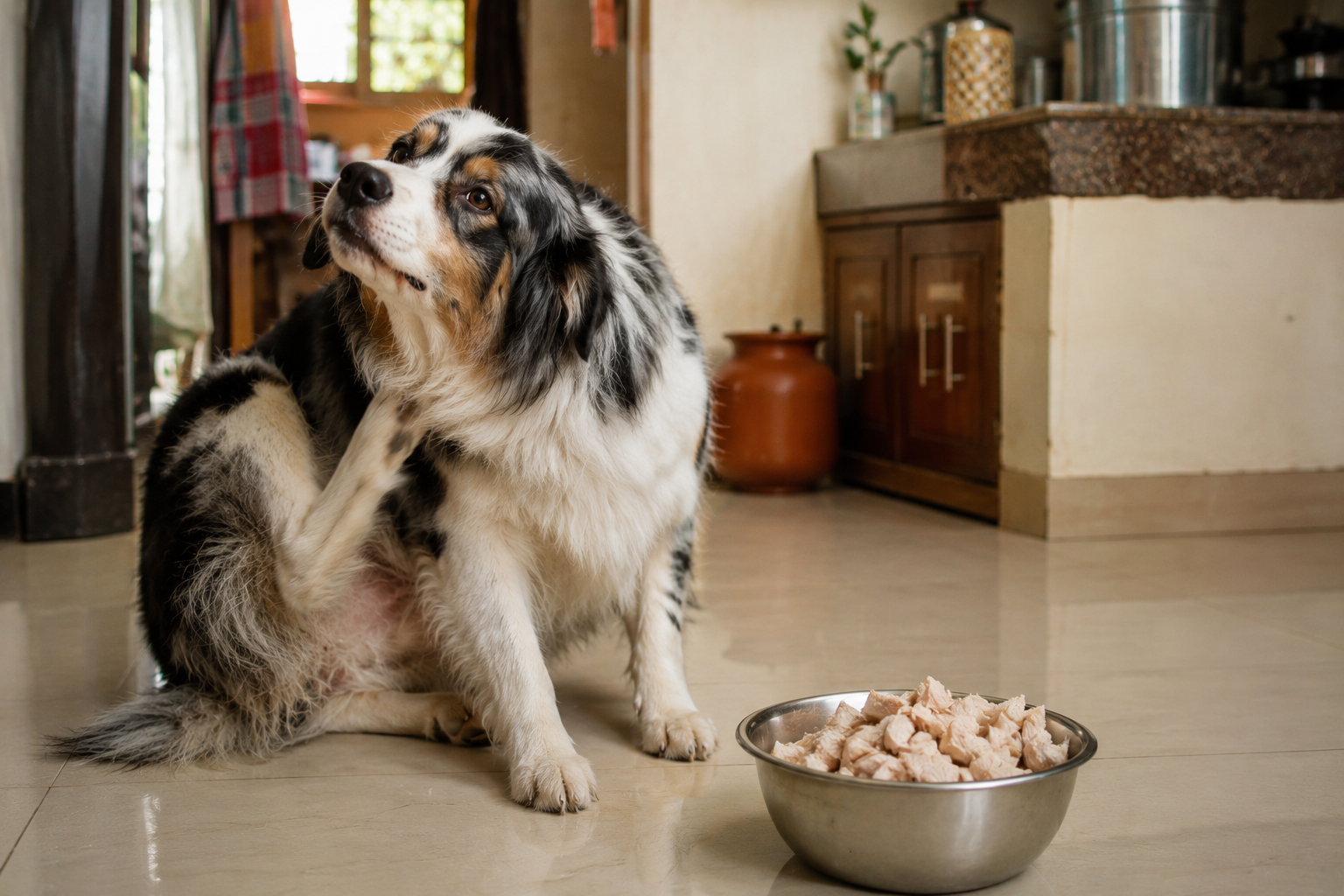
Chicken allergy in dogs: signs, why it's everywhere in India, and what to try
Symptoms of chicken allergy in dogs, why chicken dominates Indian pet food, what 'grain-free' really means, and the 6–8 week elimination check.
9 min read
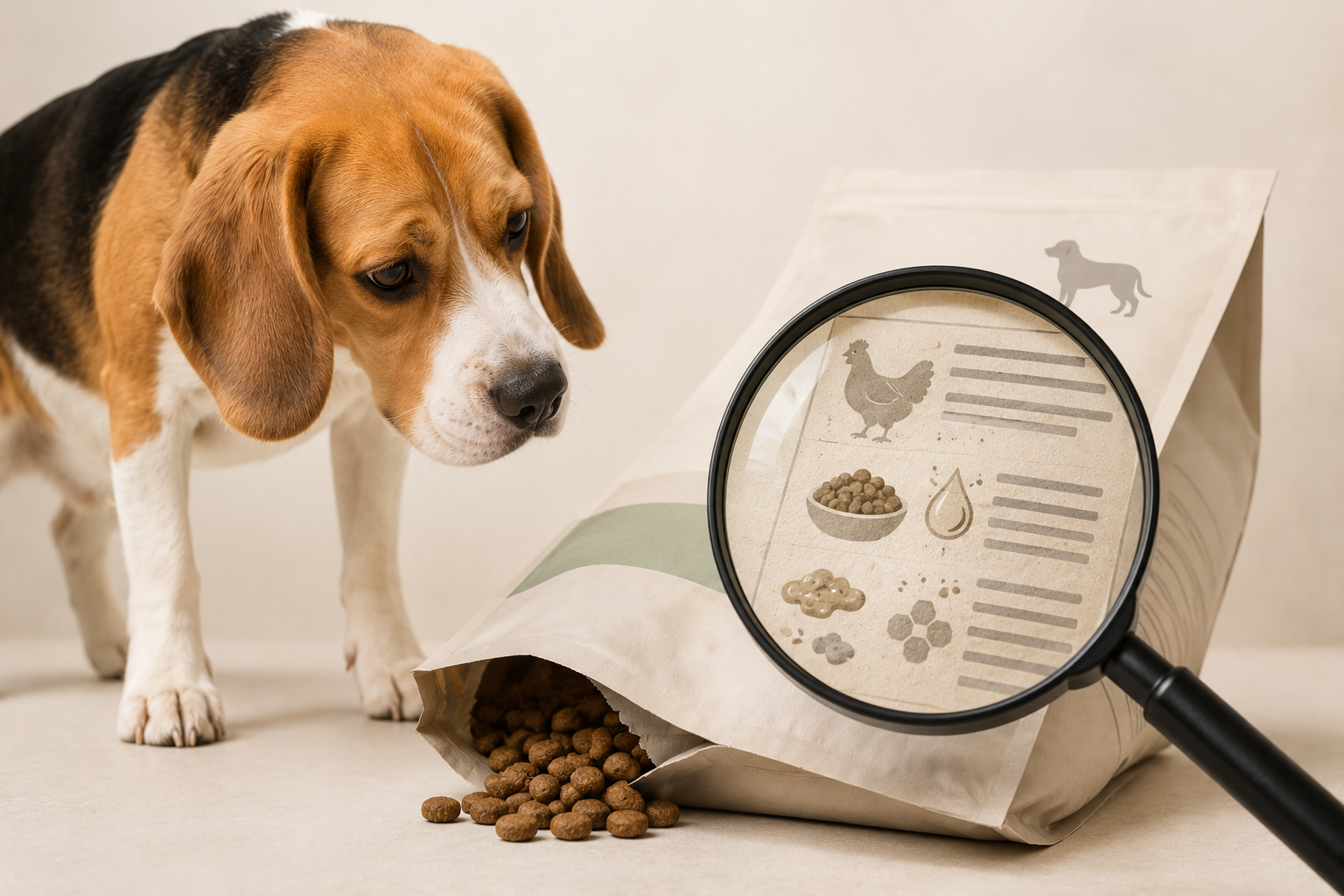
What's actually in your dog's kibble: how to read an Indian pet food label
How to read an Indian pet food label, the order rule, what 'meat by-product' really means, hidden chicken, fillers, and why marketing language is meaningless.
11 min read
Novel proteins in India: what to actually feed an allergic pet
Novel protein options for allergic dogs and cats in India: fish, mutton, rabbit, why duck isn't a real option here, sourcing, prep, and the 8-week trial rule.
9 min read