When 'bacon' means chicken: how flavour names mislead on dog treat labels
The word on the front of a dog treat pack describes the taste, not the protein. In India, the base protein is almost always chicken — regardless of whether the front says bacon, ham, or lamb.
· 5 min read
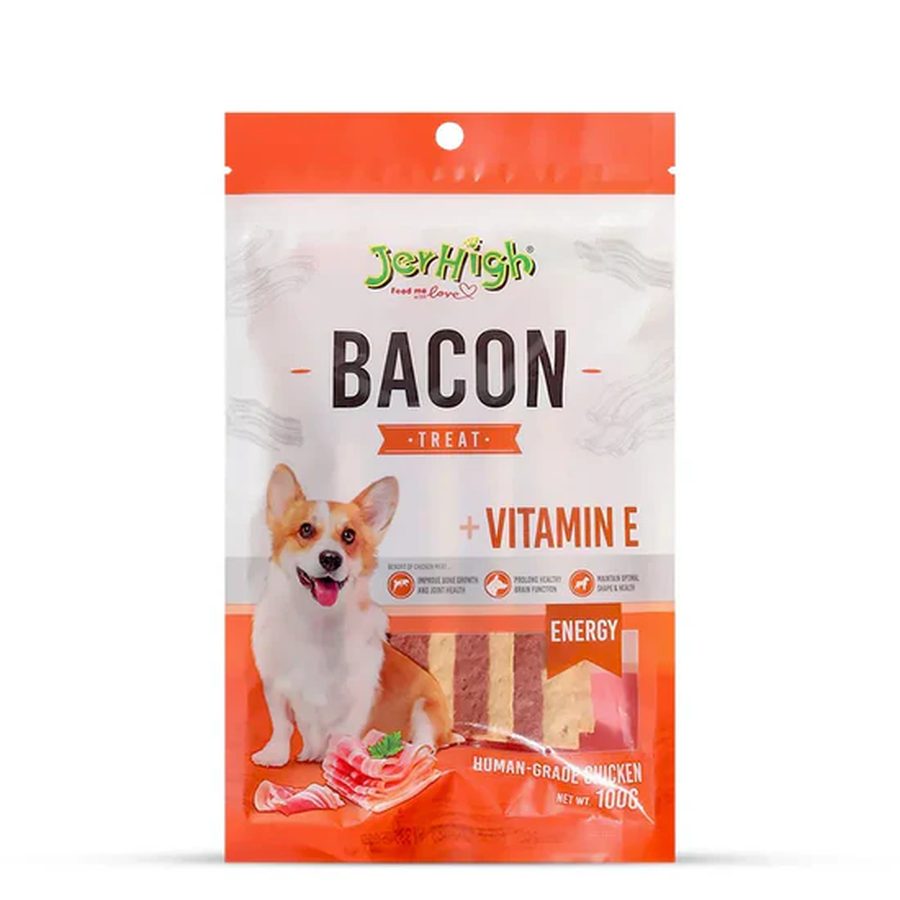
Standing in a pet store, looking for something that isn’t chicken, you pick up a treat called Bacon. The assumption is reasonable. Bacon comes from pork. The treat is called bacon. Your dog eats it through three weeks of an elimination trial, and nothing gets clearer.
The flavour name on a dog treat and the protein it is made from are two different things. In India, they rarely match.
How flavour naming works
Ingredient labelling rules require the ingredient list to be accurate. They do not require the product name to describe the dominant ingredient. A treat manufacturer can name a product “Bacon” by including a small amount of “Bacon Flavour” as an additive — while using chicken as the actual base protein.
Bacon flavour in pet food is a compound additive that produces the smell and taste dogs associate with bacon. The protein doing the structural work in the treat — the first and heaviest ingredient — is almost always chicken or poultry, because chicken is the cheapest animal protein in the Indian supply chain by a significant margin.
The same pattern applies across the flavour range:
- Bacon treat: chicken
- Ham treat: chicken
- Lamb treat: almost always chicken (covered in detail in the lamb treat case study)
- Salmon or fish treat: often chicken with a fish additive
- Cheese treat: chicken
The flavour is a taste profile. The protein is what your dog’s immune system responds to.
A useful example: when the brand is transparent
JerHigh Bacon Meaty Treat is a good illustration of this because the brand is not hiding anything. The back of the bag leads with: “Only the best quality chicken meat is selected.” The ingredient list, in order: Chicken Meat, Wheat Flour, Vegetable Glycerine, Tapioca Starch, Wheat Gluten, Sugar, Flavouring, Colourant, Vitamin E.
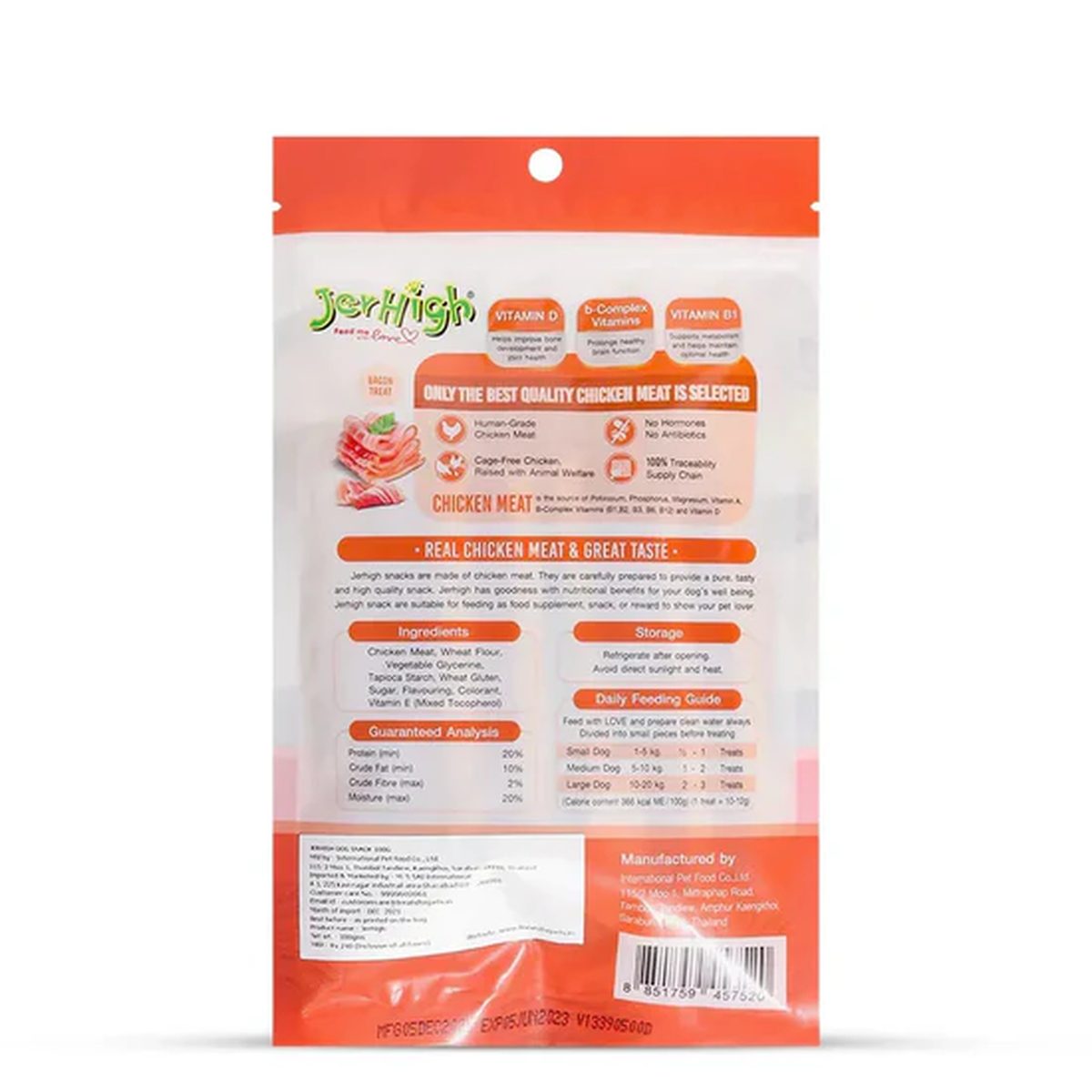
Chicken meat is the first and only named animal protein. There is no pork in the list. JerHigh considers the chicken a quality marker — cage-free, human-grade — and leads with it. A dog parent who reads the back of the bag will see this immediately.
Most don’t read the back. They read the large text on the front, which says “BACON.”
#1
ingredient in this bacon-labelled treat is chicken meat
This example is useful precisely because the manufacturer is being honest. The ingredient list is accurate. The back is clear. The confusion comes entirely from the front-of-pack flavour naming — which is how the whole category works, across every brand.
What to actually check
The five-second rule from the label reading guide applies directly here: ignore the front, read the first five ingredients on the back.
Checking a treat during an elimination trial
Look for
- First ingredient is a named non-chicken protein (Sardine, Mackerel, Mutton, Buffalo, Rabbit)
- Ingredient list is short — five to eight items
- No 'flavour' listed as a separate ingredient
- No 'Poultry', 'Meat', or 'Animal Liver' without a named species
Avoid
- First ingredient is Chicken Meat, Poultry, or unspecified Meat
- Flavour-named treat where the named protein doesn't appear in the ingredient list as actual meat
- Long ingredient list with multiple additives and unnamed animal sources
- 'Natural flavour', 'broth', or 'palatability enhancer' without a named species
What this means during an elimination trial
An eight-week elimination trial requires zero chicken exposure for the entire period. That includes treats. One flavoured treat given three times a week keeps the immune response active and makes the trial result unreadable.
If the trial is not producing a clear result, treats are the most likely source of continued exposure — not because of deliberate deception, but because the naming convention makes it easy to assume a non-chicken treat is safe when it isn’t.
For the trial period: plain dehydrated single-ingredient fish or mutton strips (ingredient list says one or two things, nothing listed as “flavour”), or a small piece of the meal protein set aside before cooking. That’s it.
This article is education, not diagnosis. If symptoms persist or worsen, please see your vet.
Frequently asked
If a treat says 'bacon flavour', does that mean it contains pork? +
No. In pet food labelling, 'flavour' refers to taste, achieved through flavouring additives. It does not indicate the protein the treat is made from. In India, the base protein in a bacon-flavoured treat is almost always chicken or poultry.
How do I know what protein a treat is actually made from? +
Read the first ingredient on the back, not the name on the front. The ingredient list is ordered by weight. Whatever appears first is the dominant ingredient. If it says 'Chicken Meat', 'Poultry Liver', or 'Meat' without a named species, the treat is almost certainly chicken-based.
Are any flavoured treats safe during a chicken elimination trial? +
Very few, in India. Skip all flavoured treats during the trial — the flavouring, the base protein, or the broth used may all contain chicken. Use a piece of your dog's trial protein set aside from their meal, or plain single-ingredient dehydrated fish or mutton strips with no additives.
Is this labelling practice legal? +
Yes. FSSAI requires the ingredient list to be accurate but does not require the product name to reflect the dominant ingredient. A treat can be called 'Bacon' because it contains 'Bacon Flavour' as an additive, even if the actual protein is chicken. The name is a marketing decision; the ingredient list is the disclosure.
Niko's story is what started ode. Read it →
Related reading
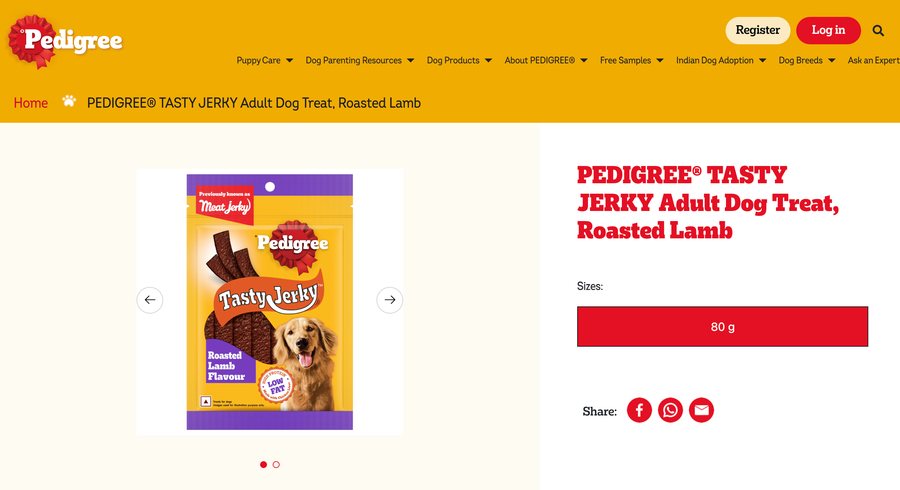
The lamb treat that's actually chicken: a label case study
Why Indian flavoured pet treats often don't contain the meat in their name. A case study of Pedigree's Roasted Lamb Tasty Jerky, the legal gap between 'flavour' and 'ingredient', and the five-second test that surfaces it.
7 min read

Hidden chicken: the ingredients that mean chicken without saying chicken
Natural flavour, animal fat, meat meal, poultry by-product: the label words that hide chicken in Indian pet food, treats, and prescription diets.
8 min read
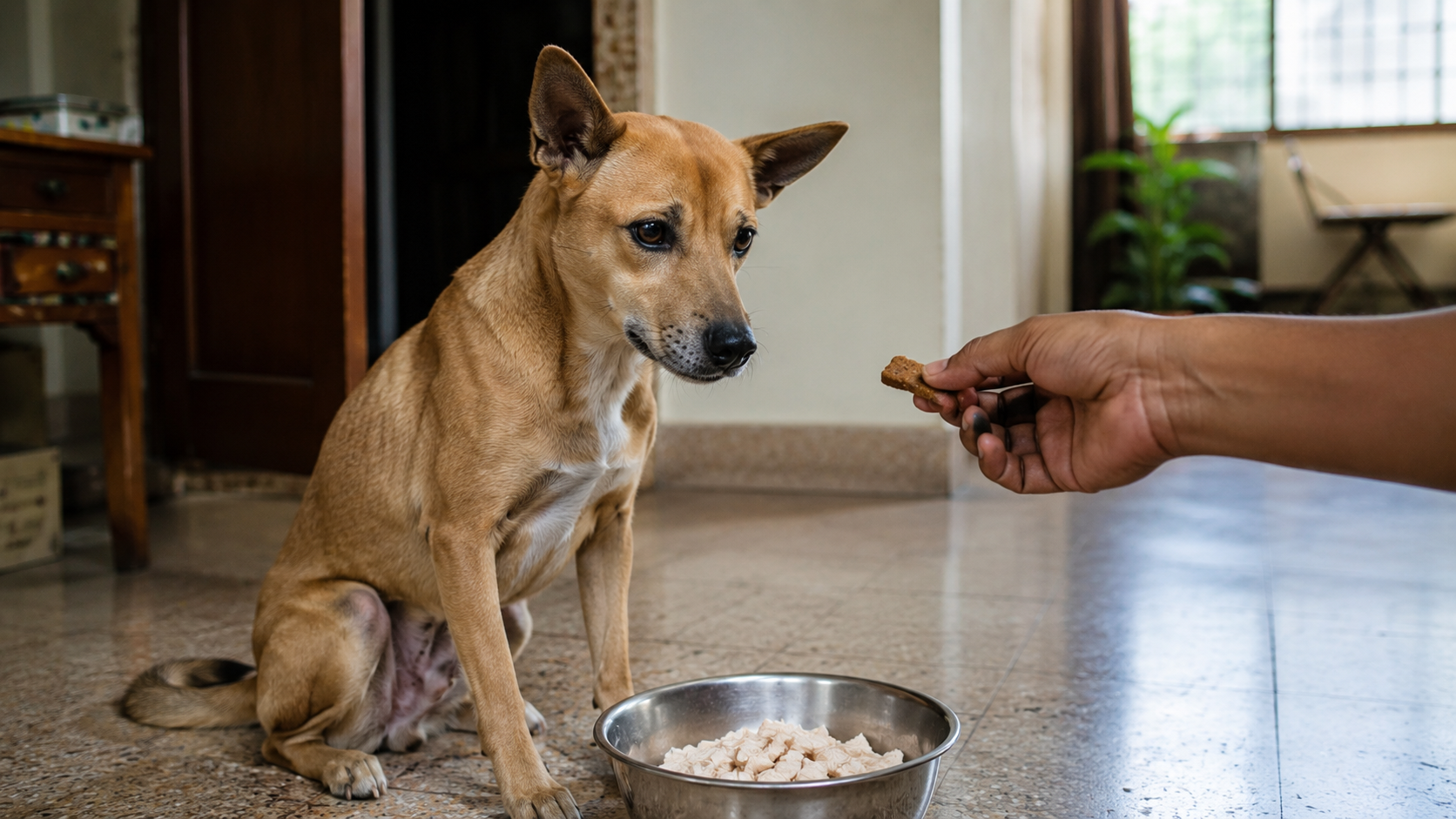
Why most Indian dog treats are off-limits during an elimination diet
Most mainstream dog treats sold in India contain chicken, including the ones that don't say so on the front. Here's what to give instead during an elimination, and why this matters more than most pet parents realise.
7 min read