Grain-free pet food: the myth, and what to actually look for instead
Grain-free is one of the most-marketed claims on Indian pet food shelves. For most allergic dogs and cats, it's also the least useful one.
· 8 min read

Walk down the pet food aisle at any premium Indian store and “grain-free” is on more than half the bags. The implication is clean: grains bad, no grains good, your allergic dog will be fine. The reality is messier.
Here’s what grain-free actually means, why it rarely solves an allergy problem, and the four things to look at on the bag instead.
What “grain-free” actually means
“Grain-free” means the food doesn’t contain wheat, corn, oats, rice, barley, or sorghum. It doesn’t say what it does contain. In most grain-free formulations, the grains are replaced with:
- Potato (white or sweet)
- Lentils, peas, chickpeas (legumes)
- Tapioca
- Pumpkin
- Sometimes more meat content
The headline ingredient (the protein) is usually unchanged. Most grain-free pet food in India still has chicken (or chicken meal, or “natural flavour” hiding chicken) as the first ingredient.
Why grain rarely triggers allergies in pets
Food allergies in dogs and cats are immune reactions to specific proteins. The repeated-exposure pattern is what drives sensitisation. In the published literature on canine food allergies, the proteins most commonly identified as triggers are:
- Beef
- Dairy
- Chicken
- Wheat (when it does appear, it’s a small share)
- Lamb
- Soy
- Egg
- Pork
- Fish
- Rice (rare)
Notice where grains sit on the list. Wheat is a real but uncommon allergen, mostly because of repeated exposure (it shows up in many kibbles and treats). Rice is almost never the trigger.
For cats, the published list is even more protein-heavy: beef, fish, chicken, dairy. Grains barely register.
So the “grain-free” framing is solving a problem that, statistically, isn’t the problem most allergic pets are having.
~80%
of Indian pet food still contains chicken, including most products marketed as 'grain-free'
The DCM question
In July 2018, the US FDA opened an investigation into a possible link between grain-free pet food and dilated cardiomyopathy (DCM), a serious heart condition, in dogs. The pattern noticed: a cluster of DCM cases in breeds not normally predisposed to it, eating boutique grain-free diets heavy in legumes (peas, lentils, chickpeas).
The investigation is ongoing. The link isn’t proven and isn’t disproven. Current best-guess hypotheses include:
- Legumes interfering with taurine metabolism (taurine is important for heart muscle).
- Bioavailability differences in grain-free formulations.
- A confounding factor in specific brands’ formulations rather than grain-free itself.
The honest read in 2026: there’s no slam-dunk answer yet, but enough signal that veterinary cardiologists are cautious about recommending grain-free diets without a medical reason. For an allergic pet, that’s an argument for grain-inclusive single-protein options over grain-free.
This matters in India too. Most of the grain-free brands sold here are imported from the US and Canada and use the same formulations that triggered the FDA investigation.
What to look for instead
Forget the front of the bag. The work is on the back. Four things to check, in order:
What to look for, what to skip
Look for
- Named animal protein in the first three ingredients
- No 'natural flavour' or 'animal fat' without a species
- No chicken anywhere if you're doing an elimination trial
- Short ingredient list, recognisable items
Avoid
- Front-of-bag marketing claims (grain-free, hypoallergenic, premium)
- Vague ingredient terms in the top three
- Long lists with unfamiliar additives
- Brands that don't disclose protein percentages
Specifically:
- First ingredient should be a named, single animal protein. “Lamb” beats “meat”. “Mackerel” beats “fish meal”. “Mutton” beats “animal protein source”.
- No vague terms in the first three ingredients. “Natural flavour” without specifying the source, “animal fat” without naming the species, “meat meal” with no animal listed: all are red flags during an elimination diet.
- No chicken hiding on the label. Even on a non-chicken bag, scan for: chicken broth, chicken fat, hydrolysed chicken, poultry meal, animal digest. These are common Indian pet food ingredients that still contain chicken protein.
- Short, recognisable list. A bag with 6-12 ingredients you can pronounce is usually a cleaner formulation than one with 30+ ingredients including unidentified additives. Doesn’t mean it’s automatically better, but it’s correlated.
The simpler test, if you’re stuck
Stand in the pet food aisle. Pick up two bags: the grain-free option, and a grain-inclusive single-protein option from a reputable brand. Compare just the ingredient lists.
If the grain-free bag has “chicken meal” as the first ingredient and “natural flavour” in the top five, and the grain-inclusive bag has “deboned lamb” as the first ingredient and a shorter list overall, the grain-inclusive bag is the better choice for an allergic dog. Not always, but most of the time in the current Indian market.
The marketing word that should drive your decision is the protein, not the grain.
What grain-free is actually good for
There are narrow legitimate uses:
- A confirmed wheat or corn allergy (uncommon, usually identified after multiple protein trials).
- A pet with a clear gluten sensitivity (rarer in dogs and cats than in humans).
- Personal preference if you’re not chasing an allergy at all, you’ve ruled out DCM concerns, and you trust the brand’s formulation.
For an allergic pet, the grain question is somewhere around variable #15 on the list of things that matter. Variables 1 through 14 are mostly about protein.
Read the protein. The grain stuff is noise.
This article is education, not diagnosis. If symptoms persist or worsen, please see your vet.
Frequently asked
If grain isn't the problem, why is grain-free so popular? +
Because it's an easy story to tell on a bag. The wider human food trend made grain-free familiar, and pet food brands followed. It signals premium without actually requiring premium formulation. The proteins inside the grain-free bag, on the other hand, are often the same chicken-based ingredients that drive the actual allergy.
Is there ever a case where a pet is allergic to grain? +
Yes, but it's uncommon. Wheat and corn can occasionally be triggers, more often in dogs than cats. If you've already ruled out chicken (and other meat proteins) with a clean elimination diet and the symptoms persist, grain becomes a reasonable next variable to test. Until then, it's a low-priority hypothesis.
What about dilated cardiomyopathy (DCM) in dogs eating grain-free food? +
The FDA opened an investigation in 2018 after a cluster of cases in dogs eating boutique grain-free diets, often legume-heavy. The link isn't fully established but isn't ruled out either. The current cautious read: if your dog is on grain-free without a medical reason for it, you're trading a marketing benefit for a small unresolved cardiac risk. For an allergic dog, the smarter move is grain-inclusive single-protein.
Is grain-free worse for cats too? +
Cats are obligate carnivores and don't need grain or other carbohydrate sources nutritionally. Grain-free for cats is closer to natural than it is for dogs. But the same point holds: if your cat is itching or over-grooming, grain isn't the variable to test, the protein is. Chicken is still the most-reported allergen.
If grain-free isn't the answer, what should I look for? +
A single named animal protein in the first three ingredients. No 'natural flavour' or 'animal fat' without a species named. No chicken anywhere on the label if you're doing an elimination trial. Brand reputation for ingredient transparency. Those four checks matter more than whether the bag says grain-free.
Niko's story is what started ode. Read it →
Related reading
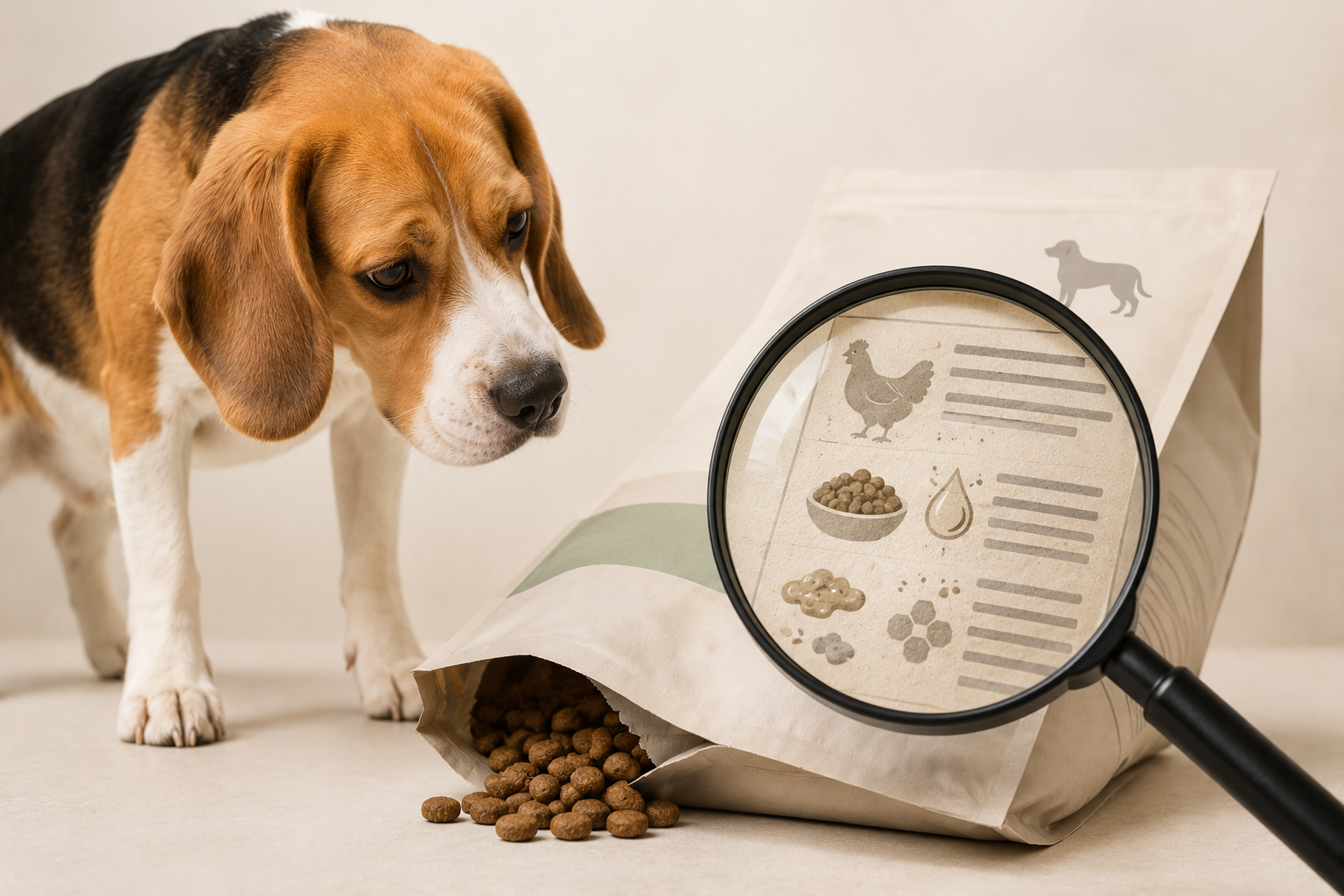
What's actually in your dog's kibble: how to read an Indian pet food label
How to read an Indian pet food label, the order rule, what 'meat by-product' really means, hidden chicken, fillers, and why marketing language is meaningless.
11 min read

Hidden chicken: the ingredients that mean chicken without saying chicken
Natural flavour, animal fat, meat meal, poultry by-product: the label words that hide chicken in Indian pet food, treats, and prescription diets.
8 min read
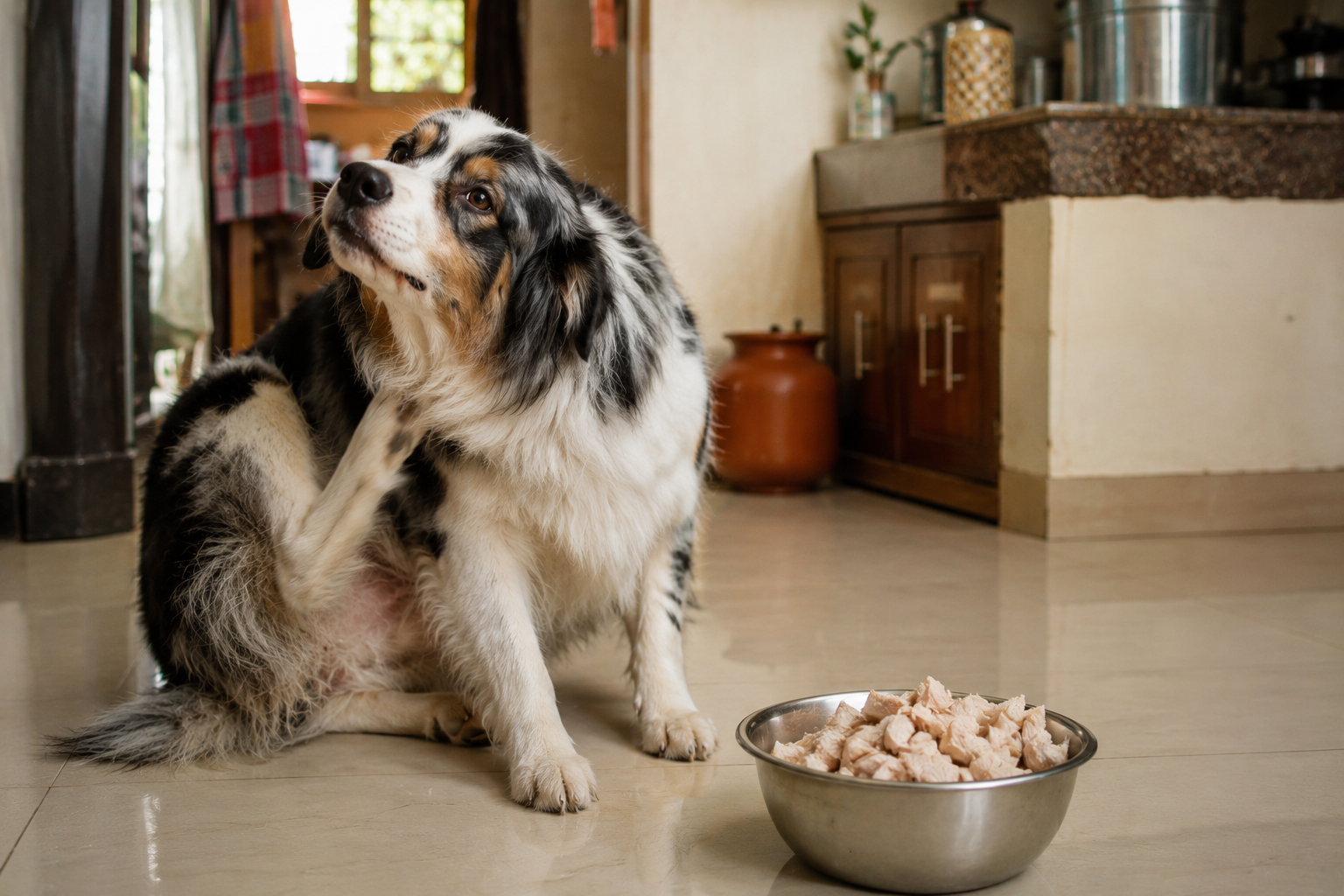
Chicken allergy in dogs: signs, why it's everywhere in India, and what to try
Symptoms of chicken allergy in dogs, why chicken dominates Indian pet food, what 'grain-free' really means, and the 6–8 week elimination check.
9 min read