Cat treats named after fish usually start with chicken
Indian cat treats follow the same naming convention as dog treats. The product is named after a secondary protein. The first ingredient is almost always chicken.
· 5 min read
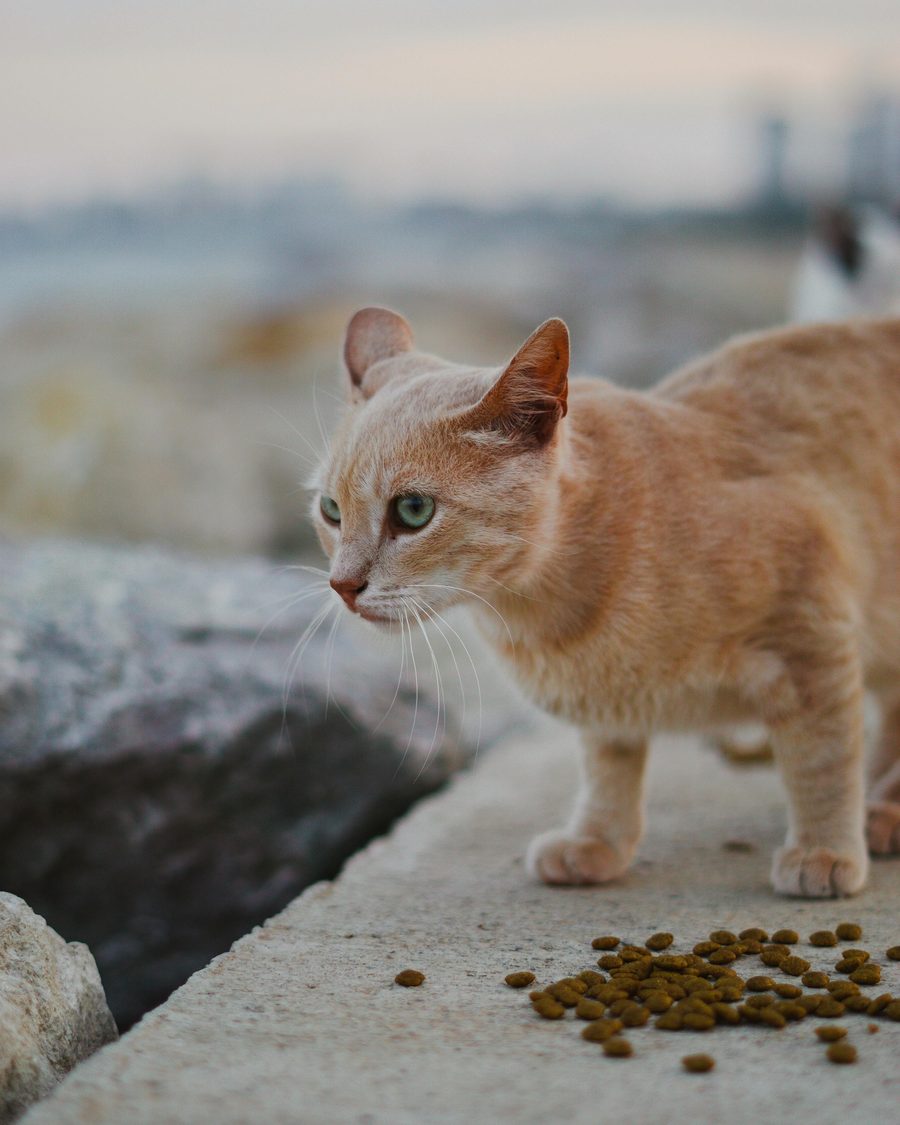
Your cat’s food has been switched to something chicken-free. The treats are named after sardines and shrimp. The scratching hasn’t stopped.
The food change may well be working. The treats are almost certainly undoing it.
The naming convention on Indian cat treats works the same way as on dog treats: the product is named after a premium-sounding secondary protein. The first ingredient — the heaviest, by weight — is almost always chicken. This is not a feature of one brand. It is how the flavoured treat category is structured across the Indian market.
How the ingredient list is organised
Indian pet food labelling follows the same ordering rule as human food: ingredients are listed by weight, heaviest first. The first ingredient is the dominant one. Whatever appears in position one makes up more of the product, by weight, than any other single ingredient.
On most flavoured cat treats sold in India, position one is Chicken Meat, Poultry, or an unspecified Meat. The named protein — sardine, shrimp, tuna, mackerel — appears second or third. It is real, it is in the treat, and there is less of it than chicken.
Position 1
where chicken appears in most Indian flavoured cat treat ingredient lists
What this looks like in practice
Applod Sardine + Blueberry Shreds and Applod Shrimp + Pumpkin Shreds are two widely sold Indian cat treats that illustrate this pattern clearly. Both carry “Gluten Free” and “Real Fish” badges prominently on the front. Both list chicken meat first in the ingredient list, ahead of the named fish or shrimp.
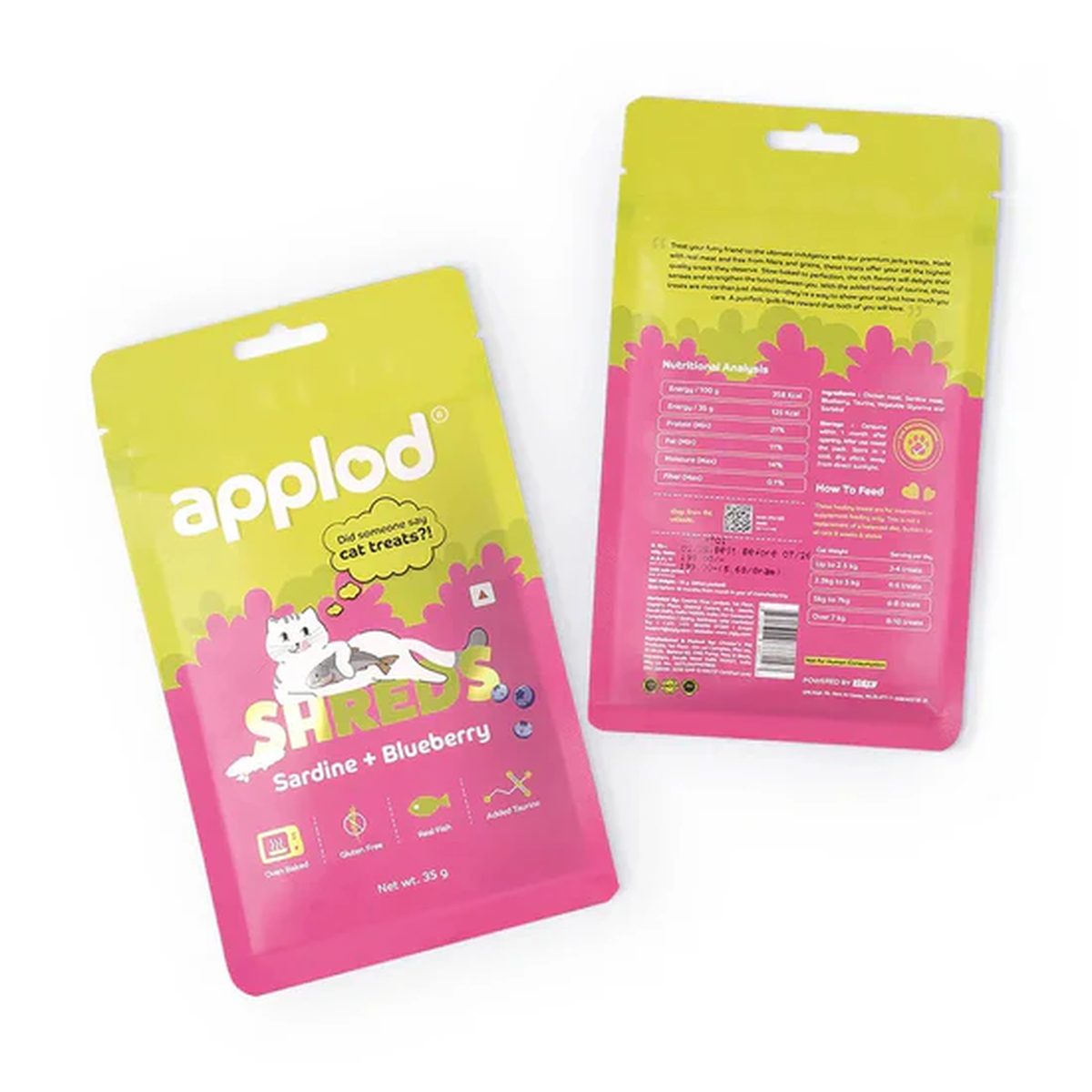
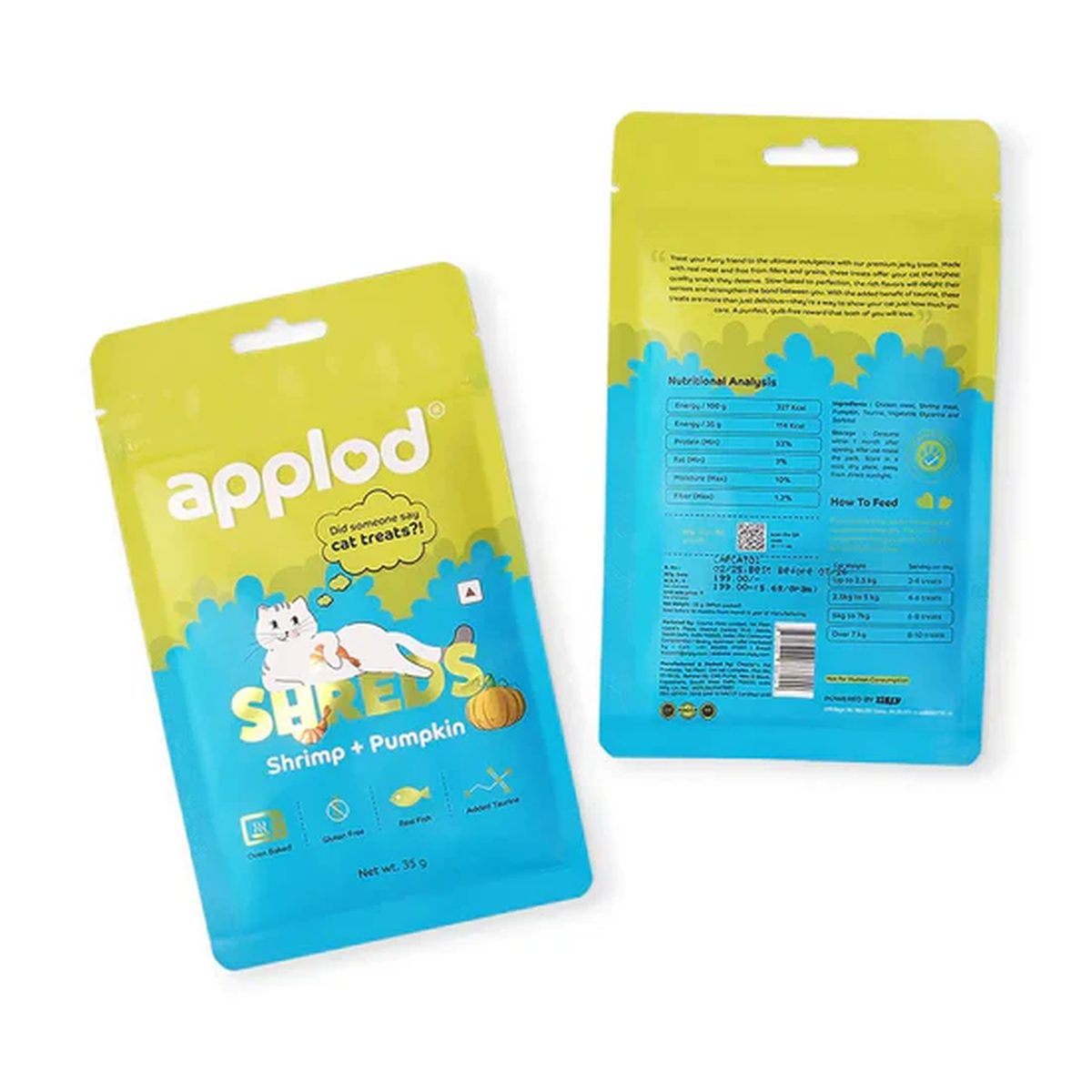
These are not unusual products. They follow the standard construction of the treat category. The same check on most other flavoured cat treats sold in India will produce the same result.
What the front-of-pack claims actually mean
“Gluten Free” — There is no wheat gluten in the treat. This is meaningful for cats with a wheat sensitivity. For a cat reacting to chicken, it is irrelevant. Gluten free and chicken free are different things.
“Real Fish” — The treat contains actual sardine or shrimp rather than just a flavouring additive. This is accurate. It does not mean fish is the primary ingredient.
Neither badge tells you whether chicken is present. For that, you read the ingredient list.
Why this matters for elimination trials
A chicken-free elimination trial for cats runs eight to twelve weeks. For the result to be readable, no chicken can enter your cat’s system during the entire period — through food, treats, toppers, or anything else.
Treats named after fish or shrimp feel like the safe option. If the first ingredient is chicken, they are not. Giving them two or three times a week keeps the immune response active and produces a trial that tells you nothing.
If your cat’s food has been switched but the symptoms haven’t improved, treats are the first thing to check. Pull every packet in the house. Read the first ingredient on the back of each one.
Reading a cat treat ingredient list
Look for
- First ingredient is a named non-chicken protein (Sardine, Mackerel, Rabbit, Venison)
- Short ingredient list — five items or fewer
- No 'flavouring' as a separate item
- No 'Poultry', 'Meat', or 'Animal Derivatives' without a named species
Avoid
- Chicken Meat, Poultry, or unspecified Meat in the first position
- 'Gluten Free' or 'Real Fish' badges used as a proxy for chicken-free
- 'Meat Derivatives' or 'Animal Derivatives' without a species named
- Any treat with 'flavouring' or 'broth' without a named source
What to use instead
The honest answer is that options are limited in India for cats with food sensitivities. The treat category is not designed for them.
Single-ingredient dehydrated sardine or mackerel strips are the most reliable option. The ingredient list should say one thing. A small piece of your cat’s meal protein — plain boiled fish, no oil, no seasoning, cooled and set aside — works just as well and costs nothing extra.
For the duration of the trial: if the ingredient list has more than five items, or if any of those items is unnamed, skip it.
This article is education, not diagnosis. If symptoms persist or worsen, please see your vet.
Frequently asked
Why do cat treats named after fish contain chicken? +
Chicken is the cheapest animal protein in the Indian supply chain. Most treat manufacturers use chicken as the base protein because it is affordable and palatable — cats and dogs find poultry liver and chicken meal highly appealing. The named fish or shrimp is present but secondary, by weight, in the ingredient list.
What does 'Gluten Free' mean on a cat treat? +
It means no wheat gluten. It says nothing about whether chicken is present. A treat can be completely gluten free and still be made primarily from chicken. For a cat reacting to chicken, the Gluten Free badge is irrelevant.
The pack says 'Real Fish' — doesn't that mean fish is the main ingredient? +
'Real Fish' confirms the treat contains actual fish rather than just fish flavouring. It does not indicate that fish is the primary protein by weight. Fish can be the second ingredient — after chicken — and the 'Real Fish' claim still holds.
What treats are safe for a cat on a chicken-free elimination trial? +
Single-ingredient dehydrated fish: sardines or mackerel with nothing added. The ingredient list should have one or two items. A small piece of the protein used for meals — plain boiled fish, before any seasoning — also works. Avoid any treat with 'flavouring', 'broth', 'poultry', or 'meat derivatives' without a named species.
How long does a chicken-free elimination trial take for cats? +
Eight to twelve weeks, with zero chicken exposure throughout — including treats, toppers, and anything shared from the table. Any chicken exposure during the trial keeps the immune response active and makes the result unreliable.
Niko's story is what started ode. Read it →
Related reading
Cat food allergies: how they show up, how they differ from dogs
Why cats develop food allergies, most often to chicken or fish, and how the symptoms differ from dogs. The picky-cat elimination protocol.
7 min read
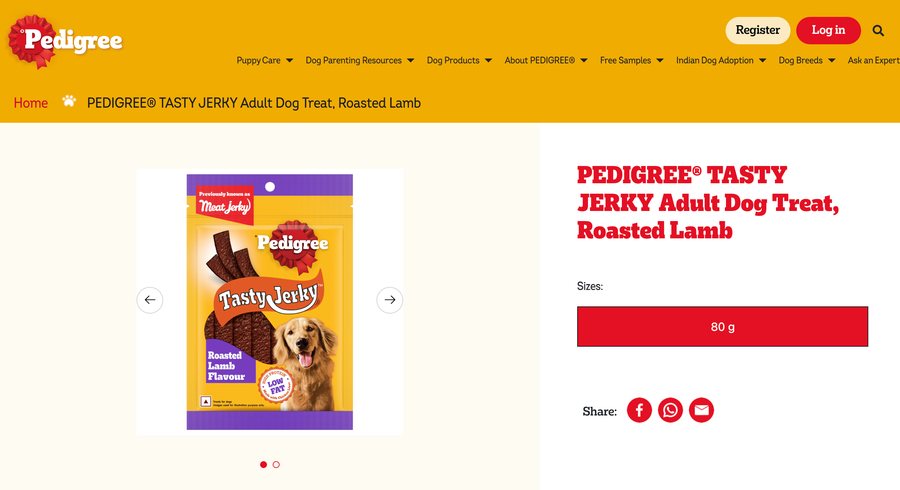
The lamb treat that's actually chicken: a label case study
Why Indian flavoured pet treats often don't contain the meat in their name. A case study of Pedigree's Roasted Lamb Tasty Jerky, the legal gap between 'flavour' and 'ingredient', and the five-second test that surfaces it.
7 min read
Hidden chicken: the ingredients that mean chicken without saying chicken
Natural flavour, animal fat, meat meal, poultry by-product: the label words that hide chicken in Indian pet food, treats, and prescription diets.
8 min read