Cat food allergies: how they show up, how they differ from dogs
Cats develop food allergies too. The signs are different. So is the elimination.
· 7 min read
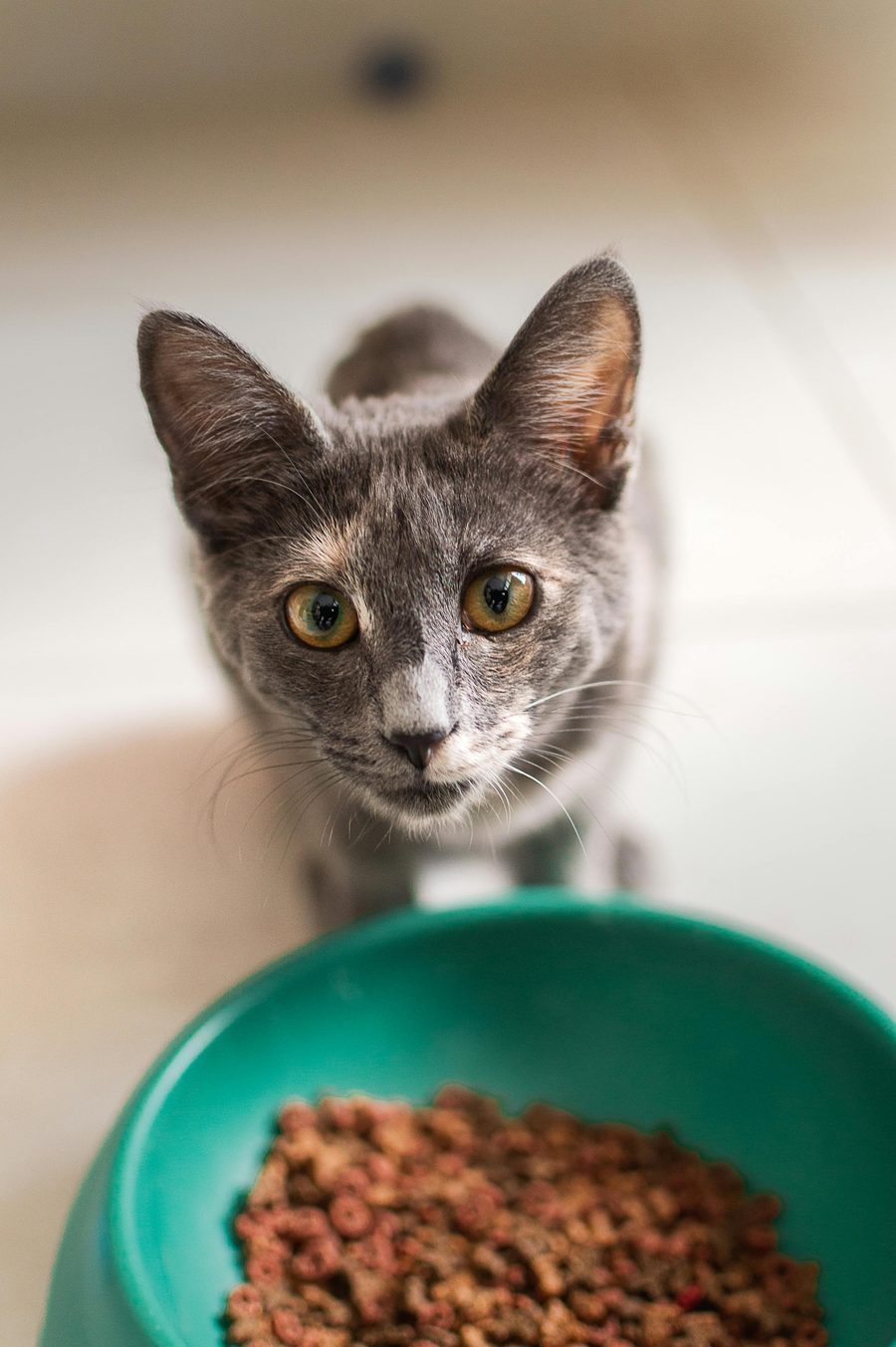
Cats develop food allergies too. Most of what’s written about pet food allergies online is dog-focused, which leaves a lot of cat parents in the dark, wondering why their cat over-grooms, why the same patch of skin keeps flaring, why the vomiting is monthly.
This is what cat food allergies look like, why they’re different from dogs, and how to run an elimination on a picky cat.
What cats share with dogs, and what they don’t
Some allergy triggers overlap. Chicken and fish lead the list for both species. Some don’t. Cats can’t process certain essential oils that don’t bother dogs, and household chemistry (cleaners, fragrances, plug-ins) hits cats harder because they groom more and metabolise some compounds more slowly.
The food work is similar to dogs. The home work is sharper for cats, the floor cleaner question and the fragrance question matter more here. Read those alongside.
The 5 most common symptoms in cats
Cat food allergy symptoms differ from dogs in a few useful ways.
1. Head and neck itching. Allergic cats often scratch around the head, ears, and neck specifically, sometimes hard enough to break skin. This is one of the most distinctive cat allergy signs and is rare in dogs.
2. Over-grooming. Cats with food or environmental sensitivities often over-groom, most commonly on the belly, the inner thighs, and the lower back. Bald patches appear without obvious skin lesions. Owners often interpret this as “just grooming a lot,” which it isn’t.
3. Recurring vomiting. Once or twice a month, often within hours of eating. Many cat parents accept this as “just being a cat.” Recurring vomiting in cats, especially after meals, is often a sign of food intolerance or allergy. It’s not normal.
4. Miliary dermatitis. A specific skin reaction pattern: small crusty bumps along the back, neck, and base of the tail, usually felt before they’re seen. A vet visit confirms it. Underlying cause is allergy, food, flea, or environmental.
5. Eosinophilic granuloma complex. Indolent ulcers on the lip, raised plaques on the abdomen or thighs, or linear granulomas on the limbs. Less common, but a clear allergy signal when present.
Other signs that overlap with dogs: ear inflammation (less common in cats but does happen), watery eyes, sneezing, loose stools, gas.
Why fish is more often a culprit than people think
In the global allergy literature, beef, fish, and chicken consistently rank as the top three food allergens in cats. Indian cat food is often fish-led, salmon, ocean fish blends, tuna, because cats find fish palatable and many premium cat food brands compete on fish-based recipes.
Top 3
cat food allergens worldwide: beef, fish, chicken. Indian cat food is fish-led.
The result is the same pattern as the chicken-and-dog problem: fish dominates the cat food market, fish gets eaten daily for years, and the immune system has plenty of opportunity to develop a reaction.
If your cat has been on a fish-based food long-term and has any allergy-pattern symptoms, fish is the protein to suspect. The elimination test is to remove fish entirely (commercial food, treats, the occasional sardine) and replace with a non-fish protein.
Choosing a novel protein for cats (rabbit, venison, duck: what’s available in India)
This is harder than for dogs. Cat food in India is more limited in protein variety than dog food.
What’s typically available:
- Rabbit: available in some specialty wet and dry foods, often imported. Good novel protein for most Indian cats.
- Venison: niche, sometimes imported. Hard to find consistently.
- Duck: increasingly available in mid- to higher-end cat food.
- Lamb: available in some cat food, less common than chicken or fish.
- Quail: very niche, sometimes available in raw food.
For an elimination, the same principle applies: pick a protein your cat has never eaten. If your cat has been on a chicken-and-fish diet for years, lamb or rabbit is your starting point. Source consistently for 8 weeks before starting.
Read: Novel proteins in India, what to actually feed an allergic pet
Cat protein picks for an elimination
Look for
- Rabbit (specialty wet/dry food, sometimes imported)
- Lamb, if your cat hasn't eaten it before
- Duck, increasingly available in higher-end food
- Single-protein wet food, easier transition than dry
Avoid
- Anything fish-based if fish has been the staple
- Chicken or 'poultry' on the label
- Multi-protein 'novel' blends
- Treats or scraps that don't match the trial protein
A note on raw and home-cooked: cats are obligate carnivores with specific nutritional needs (taurine, arachidonic acid, vitamin A). A poorly balanced home-cooked or raw diet can cause real harm faster than in dogs. If you’re considering home-cooked elimination for a cat, work with a vet who can confirm the recipe is complete.
The cat elimination protocol (and how to handle picky cats)
The framework is the same as dogs, 8 weeks, single novel protein, no exceptions. The execution is harder.
The picky-cat transition:
- Start by introducing a small amount (10%) of the new food mixed into the existing food. Increase by 10% every day for 10 days.
- Warm wet food slightly (not hot) to release the smell.
- Many cats prefer wet food to dry during a transition; if your cat will eat wet, this is often easier than a dry-to-dry switch.
- If your cat refuses the new food entirely, try a different novel protein. Don’t compromise by mixing the old food back.
The “do not skip meals” rule: Cats can develop hepatic lipidosis (fatty liver) from going more than a couple of days without eating. This is a real risk and a serious one. If your cat is refusing food entirely, work with your vet, don’t try to wait it out.
Multi-cat households: This is the hardest part. If you have one allergic cat and one not, both cats need to be on the same elimination during the trial, otherwise the allergic cat will eat the other’s food. Two food bowls in two rooms doesn’t work; cats are clever.
Outdoor cats: A cat that goes outside and hunts (or accepts food from neighbours) cannot reliably do an elimination. The trial requires controlled food intake. If your cat is outdoor-fed, this is a hard limitation; you may need to keep them in for the duration of the trial.
Treats during elimination: Cats are easier than dogs in one specific way, most cats are less treat-driven. The cost of a strict no-treats period is usually lower for cats. The cost of accidentally giving treats, a piece of fish from your plate, a piece of cheese, is the same: trial reset.
When to escalate to a vet
A vet’s intradermal allergy test is more reliable in cats than serum panels for environmental allergens, but availability varies in India. A serum test is more accessible and can be useful as a starting point.
What to do this week
- Read the ingredient list on your cat’s food. Note the leading protein.
- Note: how long has your cat been on this protein? Years count.
- Look at the rest of the diet, treats, scraps, what gets shared from the human plate.
- If you’re seeing allergy-pattern symptoms, plan an 8-week novel-protein elimination, sourcing the protein consistently before you start.
Take the 2-minute Allergy Check, the quiz forks for cat-specific questions.
Cat allergies are quieter than dog allergies. They’re not less common.
A cat that over-grooms isn’t being fastidious. A cat that vomits twice a month isn’t normal. The food is one of the most common drivers, and the test, slow, careful, patient with a picky animal, is doable.
This article is education, not diagnosis. If symptoms persist or worsen, please see your vet.
Frequently asked
Can my cat suddenly become allergic to fish? +
Yes. Like dogs, cats develop food allergies through prolonged exposure. Fish is one of the most common cat food allergens precisely because it's a common ingredient in cat food. A cat that has eaten fish-based food for years can absolutely react to it.
How do I switch a picky cat's food? +
Slowly. Cats imprint on food textures and flavours strongly. Transition over 10–14 days minimum, mixing tiny amounts of new food into the old at the start. Warm wet food slightly to release smell. Don't starve a cat into eating something, cats can develop hepatic lipidosis from skipping meals, which is dangerous.
What is miliary dermatitis? +
A skin reaction pattern in cats, small, crusty, raised bumps usually along the back, neck, and base of the tail. It looks a bit like fine grit under the fur. It's a sign of underlying allergy (food, flea, or environmental) and warrants a vet visit.
How long should an elimination take in cats? +
Plan for 8 weeks, same as dogs. Many food-allergic cats show improvement by week 4–6, but some take the full eight. The challenge in cats is usually compliance, picky eating, household cats sharing food, outdoor cats supplementing, rather than the protocol itself.
Are there breed differences? +
Some breeds, Siamese, Burmese, and other Asian breeds, are reported to develop food sensitivities at higher rates, but the data is limited. Any breed can develop allergies. Indoor lifestyle and a diet of one or two repeated proteins matters more than breed.
Niko's story is what started ode. Read it →
Related reading
Novel proteins in India: what to actually feed an allergic pet
Novel protein options for allergic dogs and cats in India: fish, mutton, rabbit, why duck isn't a real option here, sourcing, prep, and the 8-week trial rule.
9 min read

Hidden chicken: the ingredients that mean chicken without saying chicken
Natural flavour, animal fat, meat meal, poultry by-product: the label words that hide chicken in Indian pet food, treats, and prescription diets.
8 min read

The elimination diet for dogs: an 8-week, India-friendly walkthrough
How to do an elimination diet for a dog with suspected food allergy in India, choosing a protein, the no-exceptions rule, week-by-week expectations, and the reintroduction phase.
12 min read